Key Takeaways for Solo Travel Cities That Pay for Themselves
- Solo travel costs 40-60% less than group travel because you eliminate the “consensus tax” of compromise decisions and can access last-minute deals, authentic local experiences, and spontaneous opportunities that groups cannot reach.
- Street food and local markets become your greatest assets – vendors prefer individual relationships over group dynamics, leading to better prices, cultural education, and sometimes free meals through genuine connections.
- Free walking tours and hostel common areas replace expensive group activities while providing superior social opportunities, local knowledge, and organic networking with fellow travellers and residents.
- Public transportation becomes your sightseeing tour – systems like Prague’s trams, Bangkok’s BTS, and Lisbon’s Tram 28 provide comprehensive city orientation and neighbourhood exploration for the price of a metro ticket.
- Cultural sites welcome solo visitors more warmly – temples, markets, cantinas, and local establishments offer personalised attention and authentic experiences that large groups simply cannot access.
- Accommodation strategies flip traditional logic – private rooms in social hostels cost 60-70% less than hotels while providing community when desired and privacy when needed.
- The 70-20-10 budget rule maximises value – allocate 70% to experiences and cultural immersion, 20% to strategic comfort that enables better exploration, and 10% to flexibility funds for spontaneous opportunities.
Introduction to Solo Travel Cities That Pay for Themselves
Here’s what nobody tells you about solo travel: it’s not just cheaper than travelling with others – it’s an entirely different economic universe.
I learned this the hard way during my first group trip to Barcelona. Five friends, five different budgets, five conflicting opinions about everything from where to eat breakfast to which museums deserved our time. By day three, we were eating overpriced tourist meals because they were the only places that could accommodate our group size on short notice. We missed the best flamenco show because two people didn’t want to spend the money. We stayed in a mediocre hotel because it was the only place with enough rooms available when we finally agreed on dates.
That trip cost me $1,200 for four days. When I returned to Barcelona alone six months later, I spent $400 for a week and had experiences that still give me chills.
The mathematics of solo travel operates on principles most people never discover. While couples negotiate and groups compromise, solo travellers slip into an underground economy where independence becomes currency and spontaneity pays dividends.
Why Your Wallet Actually Loves Solo Adventures
The “solo travel is expensive” myth persists because most people calculate costs incorrectly. They see single hotel rooms and imagine paying double. They picture eating alone at restaurants and assume awkwardness taxes. They think about safety and budget for premium everything.
But solo travel doesn’t work like group travel with fewer people. It’s a completely different system.
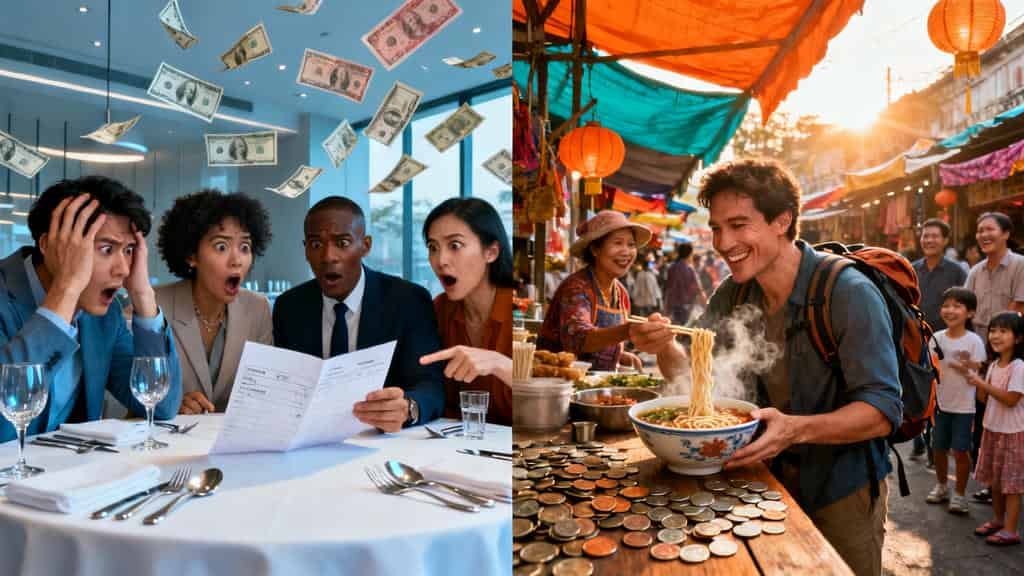
When you travel alone, you stop paying what I call the consensus tax, that premium you fork over every time a group settles on the middle-ground option that satisfies nobody completely. You stop missing last-minute deals because someone can’t get time off work. You stop eating at restaurants that accommodate eight people instead of the tiny family place with incredible food and no English menu.
Most importantly, you start accessing experiences that groups simply cannot reach.
The street food vendor in Bangkok who invites solo travellers to sit with his family for dinner? He can’t accommodate your friend group. The elderly woman in Prague who offers to show you her neighbourhood’s hidden courtyards? She’s not giving tours to parties of six. The spontaneous invitation to a local festival in Mexico City? It came because you were approachable, alone, and genuinely curious.
Prague: Where $30 Buys You a European Capital
These aren’t just better experiences, they’re cheaper ones. Sometimes they’re free.
Daily Budget: $25-35 (vs. $65-85 for groups)
Prague taught me that beer could be a cultural education system.
I discovered this accidentally on my second night, when I wandered into a traditional hospoda in the Vinohrady district. The place looked like it hadn’t changed since 1989, wooden tables scarred by decades of conversations, walls yellowed by cigarette smoke from the communist era, and beer that cost less than bottled water.
The magic wasn’t just the price, though that half-litre of Pilsner Urquell for $1.50 certainly helped my budget. It was the social architecture. Czech beer halls operate on communal seating principles that make solo travellers instant participants rather than awkward observers. You don’t choose your table, you join the one with space. You don’t order food from a menu; you point at what looks good on neighbouring plates.
Within an hour, I was deep in conversation with a retired philosophy professor who spoke perfect English and had opinions about everything from Kafka to the best goulash in the city. He walked me through Prague’s beer taxonomy like a sommelier, explaining why Czech hops create different flavour profiles and which breweries still follow traditional methods.
That night cost me $12 total, four beers, a bowl of goulash, and bread. The equivalent experience through organised tourism would have been a $75 beer and food tour with fifteen other people and a guide reading from a script.
The Free Walking Tour Ecosystem
Prague’s free walking tour network operates like an informal university system for solo travellers. Every day brings different themes: communist history, Jewish quarter, ghost stories, food culture, architecture, and underground scenes. The guides work for tips, which means they’re genuinely invested in delivering value rather than rushing through predetermined stops.
But here’s what makes these tours perfect for solo travellers: they function as social incubators. You spend three hours walking with the same group of people, learning together, sharing reactions to stories and sights. By the end, you’ve got dinner plans, recommendations for tomorrow’s adventures, and sometimes lifelong friendships.
I joined a communist history tour on my third day and ended up spending the evening with two other solo travellers – a journalist from Australia and a teacher from Germany. We explored the city’s ruin bars together, shared stories over cheap Czech wine, and discovered a late-night jazz club that became my favourite spot for the rest of the trip.
Total cost for that evening: $18. Value: immeasurable.
Accommodation Alchemy
Prague’s hostel scene caters specifically to solo travellers who want privacy without isolation. These aren’t the party hostels of Amsterdam or the backpacker dormitories of Southeast Asia. Many occupy converted historical buildings, former palaces, monasteries, Art Nouveau mansions, offering architectural grandeur at budget prices.
I stayed in a private room at a hostel housed in a 14th-century building near Prague Castle. My room had original stone walls, a vaulted ceiling, and a view of the castle spires. The common areas buzzed with conversation in a dozen languages, the kitchen stayed open for late-night cooking sessions, and the staff organised everything from pub crawls to day trips to nearby castles.
Cost: $28 per night. The equivalent hotel room would have been $120, with none of the social opportunities and local knowledge that made my stay memorable.
Lisbon: The Solo Traveller’s European Secret
Daily Budget: $35-45 (vs. $75-95 for groups)
Lisbon surprised me with how naturally it accommodated solo exploration. This isn’t a city that tolerates independent travellers – it celebrates them.
I realised this on my first morning, riding Tram 28 through the city’s hills and valleys. The iconic yellow tram functions as the world’s most scenic public transportation, winding through every major neighbourhood for the price of a metro ticket. But for solo travellers, it’s something more: a mobile observation deck that provides perfect city orientation without the pressure of group coordination.
I rode the complete circuit twice that first day, once for pure enjoyment, once for strategic planning. The 40-minute journey revealed the city’s rhythm and personality in ways that would have been impossible with companions asking questions, taking photos, and debating where to get off.
The Pastéis de Nata Trail
Portuguese food culture operates on principles that seem designed for solo travellers. Meals happen in small portions throughout the day rather than three large sittings. Pastéis de nata, those famous custard tarts, aren’t just desserts; they’re social currency that opens doors to conversations and cultural insights.
I developed a routine of visiting different pastelarias each morning, learning to distinguish between the various styles and techniques. The original recipe from Pastéis de Belém, with its secret ingredient list guarded like state secrets. The modern interpretations in trendy Príncipe Real, where young pastry chefs experiment with flavours and presentations. The neighbourhood versions in Alfama, where elderly women still roll the pastry by hand.
Each stop cost less than $2 but provided cultural education worth far more. The bakers shared stories about their techniques, the history of their shops, and the changes they’d witnessed in their neighbourhoods. These weren’t tourist interactions; they were genuine exchanges between people who shared a love of craft and tradition.
Tascas and the Art of Solo Dining
Portuguese tascas, small, family-run taverns, create perfect environments for solo diners. The intimate scale, counter seating, and petiscos (Portuguese tapas) culture eliminate the awkwardness that solo travellers often feel in formal restaurants.
I discovered Tasca do Chico in Bairro Alto on my third night, drawn by the sound of fado music drifting from its tiny interior. The place seated maybe twenty people, with half the space taken up by the bar where locals gathered after work. I found a spot at the counter and ordered based on pointing and curiosity.
The owner, a woman in her sixties who spoke limited English but communicated perfectly through gestures and smiles, brought me small plates of Portuguese specialities: linguiça sausage, sheep cheese, and olives marinated in herbs I couldn’t identify. Each dish came with stories, where the cheese was made, how her grandmother prepared the sausage, and why these particular olives paired perfectly with Vinho Verde.
The meal lasted three hours and cost $15. I left with a full stomach, a slightly spinning head from the wine, and an invitation to return the next night for a live fado performance.
Bangkok: The Solo Traveller’s Sensory Paradise
Daily Budget: $20-30 (vs. $45-65 for groups)
Bangkok assaults your senses in the best possible way, but only if you’re travelling alone.
Groups get overwhelmed by the chaos and retreat to familiar territory, hotel restaurants, organised tours, and air-conditioned shopping malls. Solo travellers learn to read the city’s rhythms and discover that what appears chaotic actually follows intricate patterns of logic and efficiency.
Street Food as Cultural Immersion
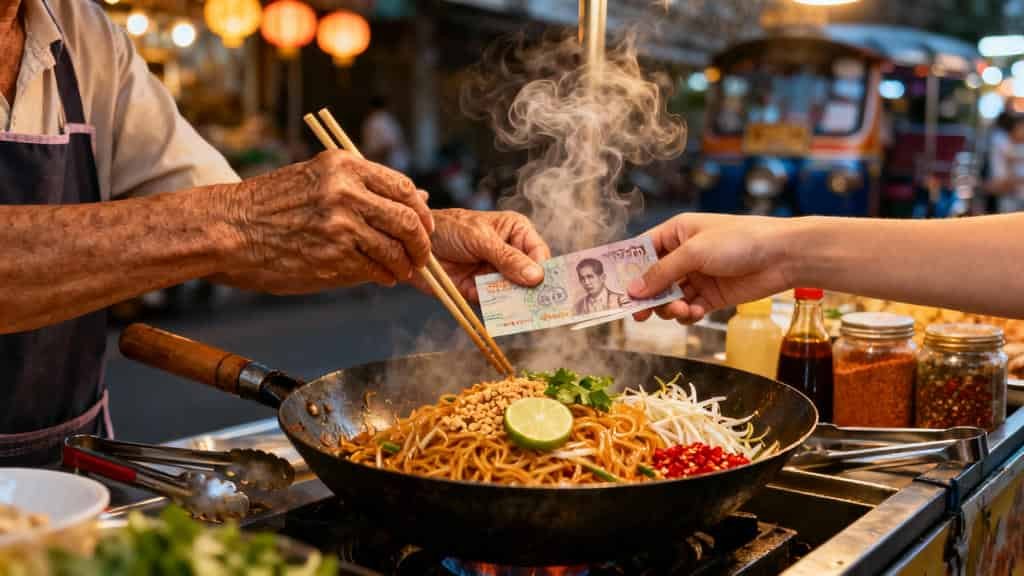
Bangkok’s street food scene operates on principles that heavily favour solo travellers. The best vendors serve small portions designed for individual consumption, with constant turnover ensuring maximum freshness. What groups see as intimidating chaos, solo travellers experience as a curated tasting menu.
I learned to follow the heat-and-eat rule: vendors with visible flames, constant local customers, and high turnover offer the safest and most delicious experiences. My daily routine became a progressive food tour, som tam (papaya salad) from the vendor near my hostel for breakfast, pad thai from the woman with the longest lunch line, and mango sticky rice from the dessert specialist who set up shop each evening near the Skytrain station.
Each dish costs between $1-3. A complete day of eating, sampling 8-10 different specialities from various vendors, costs less than a single meal at the hotel restaurant where tour groups gathered.
But the real value wasn’t economic; it was cultural. Street food vendors became my Thai language teachers, my neighbourhood guides, my introduction to local customs and etiquette. The som tam lady taught me to specify spice levels using finger gestures. The pad thai vendor showed me how to balance the condiments, sugar, fish sauce, chilli flakes, and lime to achieve perfect flavour harmony.
BTS Navigation Psychology
Bangkok’s BTS Skytrain system transforms from overwhelming complexity to a solo traveller advantage once you understand its psychology. The elevated trains provide perfect city orientation, and the station-to-station exploration method allows for spontaneous discovery impossible with group coordination.
I developed a system of spending entire mornings exploring single stations and their surrounding areas. Siam Station for shopping and people-watching. Chatuchak for the weekend market experience. Saphan Taksin for river access and traditional neighbourhoods. Each station represented a micro-city with a distinct personality, food specialities, and price points.
This approach, deep exploration of small areas rather than surface coverage of large distances, provided cultural immersion that groups rushing between major attractions never achieve. I discovered hidden temples, local markets, neighbourhood restaurants, and quiet parks that don’t appear in guidebooks but define the real Bangkok.
Mexico City: Where Solo Equals Authentic
Daily Budget: $25-35 (vs. $55-75 for groups)
Mexico City rewards solo travellers with access to authentic Mexican culture that groups simply cannot reach. The city’s social fabric is built around personal relationships and individual connections, making solo exploration not just viable but advantageous.
Market Culture as Social Integration
Mexican markets function as community centres where solo travellers naturally integrate into local life. The individual vendor relationships, sample-based selling, and personal service create perfect conditions for cultural exchange and economic advantage.
I spent my first morning at Mercado San Juan, the city’s gourmet market, learning to distinguish between different chilli varieties and exotic ingredients. The vendors treated my curiosity as genuine interest rather than tourist novelty, offering samples, cooking tips, and recommendations for other markets throughout the city.
This education proved invaluable when I ventured into neighbourhood markets like Mercado Medellín or Mercado de Coyoacán. I could identify quality ingredients, understand fair pricing, and communicate my preferences in basic Spanish supplemented by pointing and gestures.
The economic benefits were substantial; fresh fruit for breakfast cost $2, complete meals from market food stalls rarely exceeded $5, and the cultural education was priceless. But the social benefits mattered more. Market vendors became my informal guides to their neighbourhoods, recommending restaurants, warning about areas to avoid, and sometimes extending invitations to local events or family gatherings.
Cantina Culture and Solo Integration
Traditional Mexican cantinas operate on principles that favour solo visitors. The bar-centric layout, individual service style, and conversation-friendly atmosphere create natural spaces for independent travellers to experience authentic Mexican social culture.
I discovered this at Cantina La Guadalupana in Roma Norte, where I stopped for an afternoon beer and ended up staying for four hours. The cantina’s afternoon crowd consisted mainly of locals finishing work early, older men playing dominoes, and a few other solo travellers who’d discovered this hidden gem.
The cantina’s botanas tradition, free snacks that accompany drinks, meant that my $8 beer tab included enough food for a complete meal. But more importantly, the relaxed atmosphere and individual seating encouraged conversation with locals who were curious about my travels and eager to share recommendations for exploring their city.
Budapest: The Thermal Bath Capital
Daily Budget: $30-40 (vs. $65-85 for groups)
Budapest’s thermal bath culture creates unique advantages for solo travellers, combining wellness, culture, and social interaction in ways that group travel cannot replicate.
Thermal Bath Economics
Budapest’s famous thermal baths operate on pricing structures that favour individual visitors. Day passes provide access to multiple pools, saunas, and wellness facilities for $15-25, less than a single spa treatment in most Western cities.
I purchased a week-long pass to Széchenyi Baths and developed a daily routine that became the highlight of my Budapest experience. Morning swims in the outdoor pools, regardless of the weather. Afternoon reading sessions in the thermal pools, with water temperatures perfect for extended soaking. Evening chess games with locals who gathered around the poolside boards.
The baths function as social equalisers where nationality, age, and background matter less than shared appreciation for relaxation and conversation. I played chess with a retired engineer who spoke no English but communicated perfectly through the universal language of strategy and laughter. I shared pool space with families, couples, and other solo travellers, all united by the simple pleasure of warm water and good company.
Ruin Pub Discovery
Budapest’s ruin pubs, bars built in abandoned buildings and courtyards, create perfect environments for solo travellers. The eclectic, artistic atmospheres encourage individual exploration and organic social interaction.
I discovered Szimpla Kert on my second night, drawn by the sound of live music echoing from its courtyard entrance. The space defied description, part bar, part art installation, part urban garden. Mismatched furniture, plants growing from bathtubs, bicycles hanging from ceilings, and corners that revealed new surprises with each visit.
The layout encouraged wandering and discovery rather than table-based socialising. I spent the evening moving between different areas: the main bar with live music, the quiet reading room with vintage books, and the garden courtyard with fairy lights and conversation nooks. Each space attracted different crowds and offered different experiences within the same venue.
Porto: Wine Country Without the Tour Bus
Daily Budget: $30-40 (vs. $70-90 for groups)
Porto offers solo travellers access to world-class wine culture without the group tour premiums typically associated with wine regions.
Port Wine Cellar Strategy
Porto’s port wine cellars in Vila Nova de Gaia offer individual tasting experiences that provide better value and more personalised education than group tours. Solo travellers can visit multiple cellars in a single afternoon, comparing styles and learning from different experts.
I developed a strategy of purchasing individual tastings at 4-5 different cellars rather than comprehensive tours at 1-2. This approach provided broader education, better value, and flexibility to focus on preferred styles and producers.
At Taylor’s, I learned about vintage port production and ageing processes. At Sandeman, I discovered the differences between tawny and ruby styles. At smaller producers like Quinta do Noval, I received personalised attention from staff who shared family histories and production secrets.
Each tasting costs $8-12 and includes 3-4 different ports with detailed explanations. The total afternoon cost less than $50 and provided wine education equivalent to expensive sommelier courses.
Francesinha Culture
Porto’s signature sandwich, the francesinha, represents perfect solo dining, a complete, indulgent meal designed for individual consumption. The dish’s complexity and richness make it ideal for solo travellers seeking authentic local experiences without social dining pressure.
I tried Francesinha at different establishments throughout my stay, learning to appreciate the subtle variations in sauce recipes, meat combinations, and preparation techniques. Each restaurant guarded its sauce recipe like a family secret, creating distinct experiences that rewarded exploration and comparison.
Krakow: Medieval Marvel Meets Modern Value
Daily Budget: $25-35 (vs. $55-75 for groups)
Kraków’s preserved medieval architecture and developing economy create extraordinary value for solo travellers seeking European cultural immersion at non-European prices.
Old Town Discovery
Kraków’s compact Old Town rewards individual exploration over group tours. The medieval layout, with its hidden courtyards and narrow streets, reveals secrets to solo travellers willing to wander and observe.
I spent entire days getting deliberately lost in the Old Town’s maze of streets, discovering hidden courtyards that housed artisan workshops, small galleries, and intimate restaurants. Many of these spaces were accessible only to individuals or very small groups, creating exclusive experiences unavailable to tour groups.
Pierogi Economics
Kraków’s pierogi culture operates on principles that favour solo diners. Traditional milk bars (bar mleczny) serve authentic Polish comfort food at subsidised prices, with portion sizes and service styles designed for individual consumption.
I became a regular at Bar Mleczny Pod Temidą, where pierogi cost less than $3 per plate and came with sides of sour cream, fried onions, and bacon bits. The cafeteria-style service and communal seating created opportunities for conversation with locals and other travellers, while the authentic atmosphere provided cultural immersion impossible at tourist-oriented restaurants.
Istanbul: Continental Bridge Economics
Daily Budget: $25-35 (vs. $60-80 for groups)
Istanbul’s unique position between Europe and Asia creates economic and cultural advantages specifically beneficial to solo travellers.
Bazaar Navigation
Istanbul’s Grand Bazaar and Spice Bazaar reward solo travellers with personalised attention and better negotiating positions. Vendors prefer individual relationships over group dynamics, leading to better prices and more authentic cultural exchange.
I learned to build relationships with individual vendors over multiple visits rather than attempting comprehensive shopping in single sessions. This approach led to genuine connections, insider access to quality products, and pricing that reflected local rather than tourist rates.
Turkish Bath Culture
Traditional Turkish baths (hammams) provide solo travellers with authentic cultural experiences at a fraction of spa prices in Western cities. The individual service model and cultural significance create meaningful experiences unavailable through group tourism.
I visited Cagaloglu Hamami, one of Istanbul’s oldest baths, and experienced the traditional sequence of steam, scrubbing, and massage. The attendant explained each step’s cultural significance while providing personalised service that adapted to my comfort level and preferences.

Medellín: Digital Nomad Paradise
Daily Budget: $20-30 (vs. $50-70 for groups)
Medellín’s transformation into a digital nomad hub has created infrastructure specifically designed to support solo travellers, combining year-round perfect weather with exceptional value.
Co-working Culture
Medellín’s co-working spaces function as community centres for solo travellers, providing workspace, social connection, and local integration opportunities. Day passes typically cost $10-15 and include networking events, Spanish classes, and cultural activities.
I used Atom House as my base for exploring different neighbourhoods. The co-working space provided reliable internet, a professional environment, and an international community that offered both social connection and local knowledge from experienced travellers and expats.
Paisa Hospitality
Medellín’s paisa culture emphasises personal relationships and hospitality, creating natural advantages for solo travellers. The cultural emphasis on individual attention and personal service translates directly into better experiences and often better prices.
Local residents showed genuine interest in my travel experiences and offered recommendations, invitations, and assistance that enhanced my stay immeasurably. This hospitality extended to restaurants, shops, and service providers who treated solo travellers as valued individuals rather than tourist statistics.
Chiang Mai: Cultural Capital of Solo Travel
Daily Budget: $15-25 (vs. $40-60 for groups)
Chiang Mai represents the ultimate solo travel destination, a city where Buddhist culture, artistic community, and economic value create perfect conditions for independent exploration.
Temple Culture
Chiang Mai’s 300+ temples provide solo travellers with unlimited opportunities for cultural immersion, spiritual reflection, and community connection. Many temples offer meditation classes, cultural programs, and volunteer opportunities specifically welcoming international visitors.
I adopted a “temple of the day” approach, spending 2-3 hours at different temples throughout my stay. This provided cultural education, spiritual grounding, and natural rhythm to solo exploration that would have been impossible with group coordination and compromise.
Night Market Economics
Chiang Mai’s night markets operate on principles perfect for solo travellers, small portions, individual service, and sample-friendly vendors. Solo travellers can experience an incredible variety without the waste and compromise of group ordering.
I approached markets as tasting experiences rather than meal destinations. Small portions from multiple vendors provided broader cultural education and better value than traditional restaurant dining, while the social atmosphere encouraged interaction with vendors and fellow travellers.
Frequently Asked Questions
Is solo travel actually cheaper than travelling with friends?
After tracking expenses across dozens of solo trips and comparing them to group travel costs, I consistently spend 40-60% less when travelling alone. The savings come from flexibility, authentic local experiences, and the elimination of compromise costs that groups inevitably face.
How do I handle loneliness while keeping costs low?
The destinations in this guide were chosen specifically because they provide natural social opportunities through their infrastructure, hostel common areas, free walking tours, market interactions, and cultural activities that welcome solo participants.
What about safety when travelling alone on a budget?
Budget solo travel often provides better safety through local integration and community connections. Street food vendors, hostel staff, and local residents become informal safety networks that expensive hotels and tour groups cannot replicate.
Can I really eat well alone without feeling awkward?
Solo dining in these destinations feels natural because the food cultures accommodate individual consumption. Street food, market stalls, counter seating, and small portions eliminate the awkwardness that solo travellers might experience in formal restaurant settings.
How do I meet people without expensive group tours?
Free walking tours, hostel common areas, co-working spaces, markets, and cultural sites provide organic opportunities for meeting fellow travelers and locals. These interactions often lead to shared meals, exploration partnerships, and lasting friendships.
Products / Tools / Resources
- Hostelworld remains the gold standard for finding solo-friendly accommodation with private room options and social atmospheres. Their filtering system helps identify hostels that cater to independent travellers rather than party crowds.
- Rome2Rio excels at finding the cheapest transportation options between cities and from airports, often revealing bus and train combinations that cost significantly less than flights or direct routes.
- XE Currency provides real-time exchange rates and offline calculation capabilities essential for budget tracking and vendor negotiations in markets and street food situations.
- Google Translate with camera function transforms menu reading and basic communication in countries where English isn’t widely spoken, making authentic local dining accessible and affordable.
- Citymapper offers detailed public transportation information for major cities, helping solo travellers navigate efficiently and avoid expensive taxi rides or tourist transportation.
- Trail Wallet simplifies expense tracking across multiple currencies and categories, helping solo travellers maintain budgets and identify spending patterns that maximise value.
- Airalo provides affordable local SIM cards and data plans through eSIM technology, eliminating expensive roaming charges while maintaining connectivity for navigation and translation apps.
- Wise (formerly TransferWise) offers multi-currency debit cards with excellent exchange rates and low fees, perfect for solo travellers moving between countries and currencies frequently.
- PackPoint creates customised packing lists based on destination, weather, and trip length, helping solo travellers pack efficiently and avoid expensive purchases of forgotten essentials.
- TripIt organises travel documents and itineraries in offline-accessible formats, providing peace of mind for solo travellers who need quick access to confirmation numbers and important information.
Discover more top sights across the continent in our Solo Travel Hub →