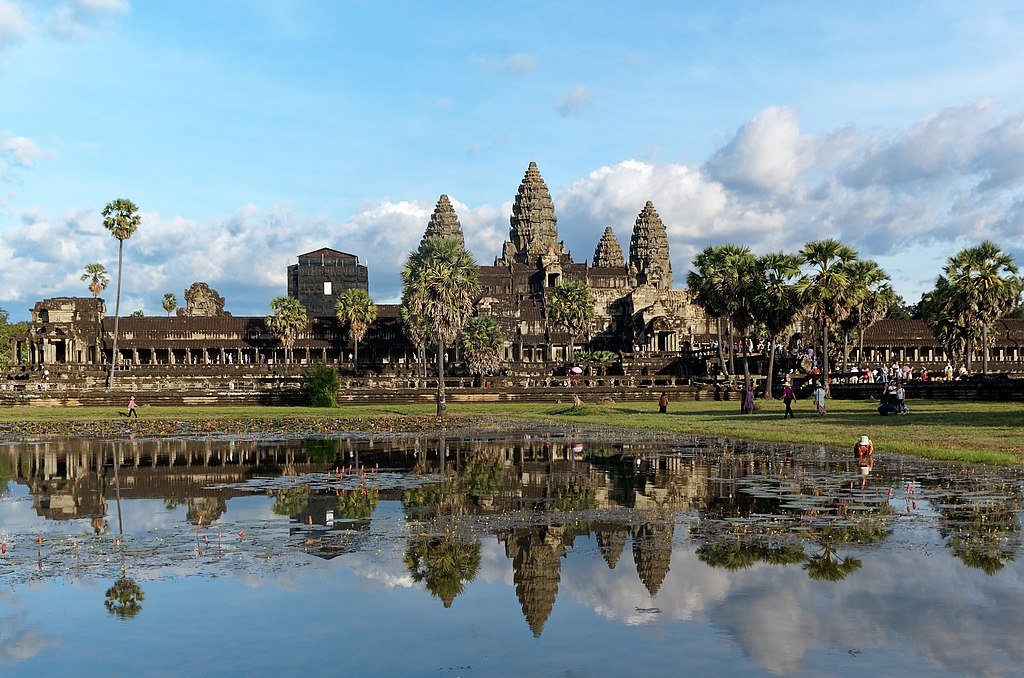
Angkor Wat needs no introduction; its five lotus-bud towers have lured travellers for generations. But this isn’t just a single temple. It’s the keystone of the vast Angkor Archaeological Park: hundreds of shrines, reservoirs and city walls stitched through jungle and rice fields, all telling the story of the mighty Khmer Empire. Whether you’re planning a once-in-a-lifetime sunrise, a family-friendly temple hop, or a deeper dive into Cambodia’s culture, this guide brings together the essential history, practical planning tips, and thoughtfully paced itineraries, plus ideas to connect your Angkor adventure with wider travel across the UK and beyond.
Angkor Wat: A short history of a giant
Angkor Wat rose in the early 12th century as the state temple and mausoleum of King Suryavarman II. Conceived as a symbolic Mount Meru, the cosmic home of the gods, it fuses the “temple-mountain” form with long galleried courtyards. In the following centuries, the centre of power shifted north to Angkor Thom, crowned by the enigmatic, many-faced Bayon. Buddhism ultimately supplanted Hinduism, and Angkor’s sacred purpose adapted with it.
The modern story is just as compelling. In the 1990s, after conflict and looting, Angkor was inscribed as a UNESCO World Heritage Site and placed on the “in danger” list. A remarkable multinational preservation effort coordinated by the APSARA National Authority with partners from Japan, India, France and others, stabilised monuments, mapped the ancient city with LiDAR, and reshaped visitor management. Angkor was removed from the danger list in 2004, a milestone for heritage protection and sustainable tourism.
Fast facts & figures
- What “Angkor” means: “Capital city” or “holy city” in Khmer.
- The park: An archaeological landscape spanning roughly 400 km², from headline temples to barays (reservoirs), moats, causeways and laterite roads.
- Angkor Wat: The world’s largest religious monument, encircled by a ~200 m-wide moat and fronted by a long sandstone causeway; its five central towers symbolise the peaks of Mount Meru.
- Architectural stars:
- Angkor Wat (Hindu origins, later Buddhist) for sunrise, bas-reliefs and the upper “Bakan” sanctuary.
- Bayon for smiling stone faces and narrative reliefs.
- Ta Prohm for root-strangled galleries (yes, the “Tomb Raider” temple).
- Banteay Srei for exquisite pink-sandstone carvings.
- Today: Ongoing conservation; improved visitor flows; new airport access for Siem Reap.
(Tip: if temple terminology feels new, gopura (gate), naga (serpent balustrade), apsara (celestial dancer), and devata (standing deity), keep a shortlist handy or snap labels as you go.)
Angkor Wat: Planning your visit
Getting there
- By air: Siem Reap–Angkor International Airport (SAI) serves the region with connections via Bangkok, Singapore, Kuala Lumpur, Seoul, Ho Chi Minh City and others. Expect an hour’s shuttle/bus or taxi to town due to the airport’s new out-of-town location.
- From the UK: No direct flights. Typical one-stop routes run via the hubs above; total journey times vary with layovers.
- Visas: UK visitors need a tourist visa. The official e-Visa portal streamlines applications – apply a few days ahead, travel with your e-Visa printout and passport (six months’ validity recommended).
- Travel insurance: Strongly advised – temple steps are high, paths uneven, and tropical weather fickle.
Angkor Pass & entry
- Pass types: 1-day, 3-day (valid over 10 days), and 7-day (valid over 30 days). Buy online from the official Angkor Enterprise portal/app or at the ticket office. Your photo is embedded on the pass; keep it handy for checkpoints.
- Opening times:
- Sunrise access is available for flagship spots such as Angkor Wat (arrive early).
- Many other temples run standard daytime hours; closures can vary for upper sanctuaries or during conservation.
- Dress code: Cover shoulders and knees (for all genders). Scarves/shawls used over bare shoulders can be refused at temple entrances – pack proper sleeves.
- Drones: Banned without written permission from APSARA; penalties apply.
- Etiquette: Temples are active sacred spaces, be mindful around monks and worshippers; don’t climb, sit or touch carvings; keep voices low; no smoking, and no revealing outfits.
How to get around
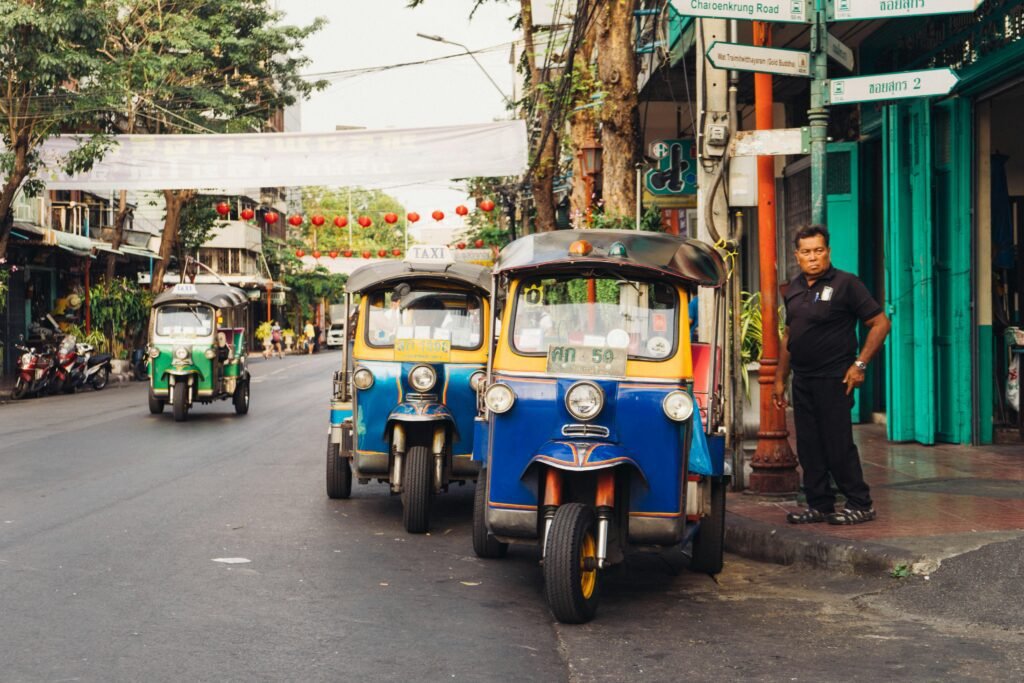
- Tuk-tuk: The classic, breezy way to temple-hop. Agree the route and daily hire up front.
- Car/van: Best for families with small children, travellers with reduced mobility, or longer days to Banteay Srei/Beng Mealea.
- Bicycle/e-bike: A joy in cool months – check battery range, carry water, and avoid midday heat.
- Guide or self-guided?: A good local guide brings the bas-reliefs to life and helps sequence the day to dodge crowds. Self-guiders should download offline maps, temple plans and a sunrise/sunset timetable.
Family, couples & solo: tailored advice
- Families:
- Bring a soft carrier for toddlers – strollers struggle on stairs and laterite.
- Break the day: early-morning temples, hotel pool at midday, light sunset stop.
- Make it a story hunt: spot Garuda birds, nagas, the Churning of the Ocean of Milk, and Hanuman.
- Couples:
- Swap the most crowded sunrise pool for a quieter corner or choose sunset at Pre Rup or Phnom Bakheng for golden-hour drama.
- Consider a romantic dinner at a contemporary Khmer restaurant in town and an evening at Phare, the Cambodian Circus.
- Solo travellers:
- Start early to see big hitters with space.
- Mix headline sites with solitude: Preah Khan, Ta Nei, or Preah Dak village en route to Banteay Srei.
- Join a small-group food walk or craft workshop to meet others.
Best time to go & weather
- Cool/dry (Nov–Feb): Clearer skies, peak crowds; perfect for cycling and long days.
- Hot (Mar–May): Bring sun protection, a hat and electrolyte tabs; start at dawn, siesta at noon, return late afternoon.
- Green season (Jun–Oct): Lush moats, dramatic clouds, occasional heavy showers; paths can be muddy, but photographers love the reflections.
On-the-ground essentials
- What to wear: Breathable fabrics that cover shoulders and knees; a light scarf for dust (not as a shoulder cover); comfy closed shoes for steep stairs.
- What to carry: Refillable bottle, electrolytes, insect repellent, sunscreen, small torch (pre-dawn paths), wet wipes, and small notes for tips.
- Photography: Tripods are fine in most exterior areas; avoid blocking walkways and be considerate at sunrise pools. Inside galleries, keep flash off.
- Accessibility: Exterior causeways and ground-level galleries are manageable, but many sanctuaries have steep, narrow stairs. Angkor Wat’s Bakan (upper level) has restricted entry with steep climbs – plan alternatives if needed.
- Safety: Watch for loose stones; keep distance from monkeys; hydrate often.
Major temples & how to see them
Angkor Wat
The main west gate opens onto the long causeway, libraries, cruciform terraces and the central sanctuary. Don’t rush: it’s easy to spend two to three hours following the bas-reliefs – epics like the Churning of the Ocean of Milk – before climbing towards the Bakan (entry often managed by timed queues). At sunrise, the reflection pools in front of the west facade pack out; arrive early or pick a less crowded angle from the near lawns.
Angkor Thom & Bayon
Enter through the monumental South Gate, then wind to Bayon, whose towers bear serene faces (likely Avalokiteshvara). Nearby: Baphuon, the Elephant and Leper King Terraces, and the quiet cloisters of Preah Palilay for shade and birdsong.
Ta Prohm
Root-bound and atmospheric, Ta Prohm’s silk-cotton trees and strangler figs wrap galleries and doorways. Go early or late for fewer people and softer light; be respectful of barriers – roots and stones are fragile.
Banteay Srei
A 30–45-minute drive reveals a jewel box of pink-sandstone carving with pediments that read like an illustrated myth. Combine with a countryside lunch, a stop at Preah Dak for hand-pulled noodles, or the Koulen Angkor museum workshops.
Worth your time
- Preah Khan: Vast, maze-like corridors and a forest-temple feel without Ta Prohm’s crowds.
- Ta Nei: A little out of the way; wonderfully quiet under tall trees.
- Pre Rup: Warm, brick-red temple-mountain – superb for sunset.
- Beng Mealea: Further afield, a romantic ruin of tumbled stones and forest.
Two realistic itineraries (plus one bonus route)
1) One superb day: Sunrise to sunset “Small Circuit” (approx. 35–40 km)
- 04:45–05:30 — Transfer to Angkor Wat; pass check and walk to the reflection pools.
- 05:30–07:00 — Sunrise and first light on the facade; explore the outer galleries.
- 07:00–08:30 — Bas-reliefs clockwise (Battle of Kurukshetra, Churning of the Ocean of Milk), then central courtyards. Early slot for the Bakan if open.
- 08:30–10:00 — Breakfast break (bring a packed bite or coffee near Srah Srang).
- 10:00–12:00 — Ta Prohm in the late morning hush; continue to Ta Keo for clean lines and views.
- 12:00–15:00 — Long lunch & rest back in Siem Reap (or a shady stop by the moat).
- 15:00–16:30 — Enter Angkor Thom via South Gate; Bayon for late-afternoon light on the faces.
- 16:45–18:15 — Pre Rup for sunset (gentler crowds than Phnom Bakheng).
- Evening — Shower, then dinner and an optional Phare Circus show.
Family tweak: Skip Bakan’s steep stairs; add the shaded Terrace of the Elephants for open space.
2) Two to three days: Grand Circuit + Banteay Srei & countryside
Day 1 — Follow the one-day plan but pace slower; add Preah Khan after Bayon.
Day 2 — Banteay Srei in the cool morning, with stops at Kbal Spean (riverbed carvings; forest walk) or Banteay Samré. Lunch in Preah Dak (try num banh chok – rice noodles with green fish curry). Late day at Ta Nei or Neak Pean for water-scapes and calm.
Day 3 (optional) — Beng Mealea plus a Tonlé Sap village (choose a responsible operator focused on community benefits). Back in town for the Angkor National Museum to deepen the context before your final dinner.
Couples’ twist: Book a countryside sunset picnic near lotus ponds; add a spa hour before dinner.
Bonus: The mindful soloist (3 days, slow & deep)
- Day 1 — Dawn Angkor Wat; hire a guide for two focused hours on iconography; quiet time in the cloisters; afternoon cycling loop to lesser-known shrines.
- Day 2 — Angkor Thom side-doors (North/East Gates), Bayon at opening, Preah Palilay, then journaling time under trees by Srah Srang.
- Day 3 — Banteay Srei, then a craft class (silver, ceramics or palm-leaf weaving). Evening street-food crawl near Wat Bo and the Old Market.
Ticketing, timings & temple etiquette (at a glance)
- Angkor Pass: Buy online or at the official office before entering the park. Multi-day passes allow non-consecutive days within a longer window – ideal for mixing temples with rest days.
- Best crowd-avoidance:
- Swap the “left reflection pool” sunrise scrum for the right-hand pool or the lawns, or watch first light from within the inner galleries.
- Bayon is quieter right at opening or in the last hour of the day.
- Ta Prohm empties over lunch; Banteay Srei is serene at 08:00 or after 16:00.
- Sunset choices: Pre Rup (wide views, easier access), Phnom Bakheng (classic hilltop, but entry numbers are capped; arrive early), or simply the western moat of Angkor Wat for water reflections.
- Clothing: Cover shoulders and knees. Scarves wrapped over tank tops are regularly refused; plan proper coverage.
- Respect: Don’t touch carvings. Step aside for worshippers. No loud music, no smoking, no climbing on balustrades.
- Drones: Prohibited without written approval; don’t risk it.
Where to stay: areas & styles
- Wat Bo / riverside (central, walkable; cafés and boutiques): ideal for couples and solo travellers who like to explore on foot.
- Charles de Gaulle / French Quarter (leafy, near museum): classic hotels in a quieter pocket – good for heritage lovers and families.
- Sala Kamreuk / Wat Damnak (local feel, creative dining): small boutiques and guesthouses.
- Roads to the temples (east/north): resort-style properties with pools and gardens – great for families who want easy downtime.
Notable picks across budgets (choose by vibe, not star-count):
- Boutique heritage: Colonial-era grande dames with gardens and generous pools; expect gracious service and curated temple experiences.
- Design-forward: Sleek, contemporary retreats near Wat Bo with spa and excellent breakfasts.
- Mid-range comfort: Family-friendly hotels with inter-connecting rooms, salt-water pools, and tuk-tuk shuttles.
- Budget gems: Clean, social hostels and guesthouses – look for ones that support local training programmes and fair wages.
(Booking tip: for peak months, reserve well ahead. Ask hotels about packed breakfasts for sunrise and the earliest tuk-tuk departures.)
Where to eat & drink
Siem Reap’s food scene is one of Southeast Asia’s quiet joys. Look for amok (coconut-curried fish), samlor korko (vegetable stew), nom banh chok (fresh rice noodles), and pepper-laden kampot dishes.
- Contemporary Khmer tasting: Leading kitchens reimagine local produce with finesse – reserve in advance (smart-casual dress).
- Traditional Khmer: Long-time favourites serve home-style curries, salads and grilled river fish in welcoming wooden houses.
- Street-level & cafés: Iced coffees, palm-sugar sweets, fresh fruit shakes; grab-and-go bánh-mi-style sandwiches if you’re racing to the sunrise.
- Responsible dining: Training restaurants that support youth skills are an excellent, impactful choice for lunch.
Evenings pair well with Phare, the Cambodian Circus (acrobatics, live music, social impact story), a slow wander by the river, or a cocktail in a leafy courtyard. Early nights are no shame – temple days start before dawn.
Seasonal events & special experiences
- Khmer New Year (mid-April): Water fights, music and temple fairs – lively and hot.
- Water Festival (Bon Om Touk; Nov): Boat races and illuminated floats on rivers nationwide; Siem Reap stages its own celebrations.
- Angkor Wat International Half Marathon (Dec): A sunrise start through temple roads – book early if you plan to run.
- Ultra-Trail Angkor (Jan): Trail events through the archaeological landscape, from 8 km to 100 km.
- Workshops: Rice-noodle making in Preah Dak, palm-sugar farms, lacquer and silver studios – gentle ways to connect with Khmer life.
- Museum time: The Angkor National Museum gives much-needed context – ideal on your arrival day or during midday heat.
Responsible travel at Angkor
- Support local: Hire licensed guides and drivers; buy crafts from accredited makers (look for quality labels and co-ops).
- Choose tours carefully: Floating-village visits should respect residents’ privacy and share proceeds with the community.
- Tread lightly: Keep to paths; don’t move stones “for a better photo”; pack out litter.
- Cultural sensitivity: This landscape is spiritual and lived-in – dress modestly, ask before photographing people (especially monks), and keep drones grounded.
Broader UK tie-ins: where Angkor leads next
Angkor is a masterclass in how landscapes and belief systems shape architecture. If it stirs your curiosity, fold that energy into travel closer to home and across the UK:
- UNESCO conversations: From Stonehenge to Durham Cathedral and Canterbury, explore how sacred geometry, procession routes and astronomical alignment echo across cultures.
- Museum deep dives: The UK’s major museums hold rich Southeast Asia galleries – use them to decode iconography you saw in Cambodia (nagas, Garuda, apsaras), or to frame a future trip to Laos or Thailand.
- Heritage itineraries: Pair Angkor’s temple-city with British monastic and cathedral circuits (e.g., Fountains Abbey, Iona, St Davids) to reflect on how faith and power leave footprints in stone.
- Family learning: Tie kids’ “temple detective” skills to UK castle trails – spot battlements vs. balustrades, compare waterworks (moats, causeways) at Caerphilly or Cambridge’s bridges.
Angkor rewards patience and presence. It’s less about ticking temples and more about noticing details: the fingertip polish on a 12th-century relief, the way dawn light warms sandstone, the quiet kindness of a caretaker sweeping leaves. Pace yourself, go early, rest often and let the city of temples open on its own terms.
Practical mini-planner
- Money: Cards are widely accepted in town; carry small cash for tips, snacks and tuk-tuks near temples.
- Connectivity: Local SIMs are inexpensive; maps and translator apps help with rural detours.
- Health: Heat management matters – electrolytes, shade breaks, and conservative daily mileage.
- Packing: Microfibre towel (rain), zip-bags for cameras, spare power bank.
- With children: Make a temple “treasure list,” promise a pool hour, and keep snack morale high.
Photography quick hits:
- Sunrise: west facade, left or right reflection pool.
- Bas-reliefs: go early for even light and fewer shadows.
- Faces of Bayon: late afternoon side-light is flattering.
- Long exposures: bring an ND filter for moat reflections.
Accessibility note: Ground-level areas are the most manageable; many sanctuaries have high risers and no handrails – consider a private car and a guide who can tailor routes.
Where to go next in Cambodia
- Phnom Kulen: Waterfalls, reclining Buddha and jungle archaeology (day trip).
- Battambang: Colonial architecture, arts scene, countryside rides.
- Kampot & Kep: Pepper farms, river sunsets, crab market.
- Phnom Penh: Royal Palace, National Museum, and difficult history sites approached with care.
- Islands: Beach downtime on Koh Rong/Koh Rong Samloem after your temple marathon.
Final thoughts
Angkor Wat is a marvel, but it’s the whole living landscape that makes the journey unforgettable. Build in time to breathe between the icons, seek out the small details, and favour quality over quantity. Families, couples and solo explorers all find their rhythm here. With a thoughtful plan, respectful dress, early starts and a sense of wonder, you’ll come home with more than photos: you’ll carry a new way of reading old stones – useful from Siem Reap to Salisbury Plain.