Key Takeaways for the Beginner’s 30-day Southeast Asia backpacking guide
- Daily Costs Are Low: Shoestring backpackers can travel for $22–$35 USD per day, especially in countries like Cambodia, Vietnam, and Laos, where costs are lowest.
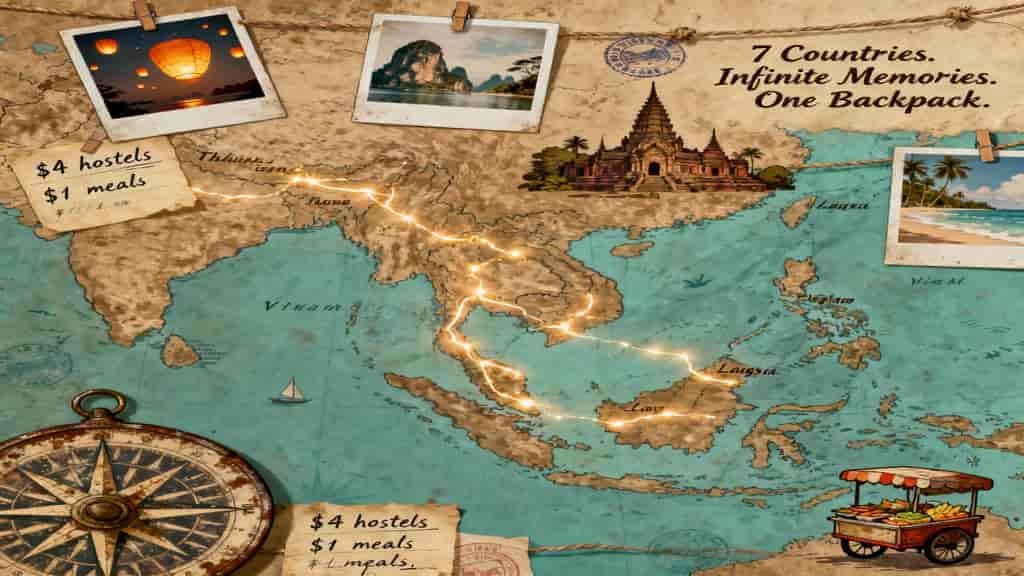
- Accommodation Is Affordable: Hostel dorm beds typically cost $4–$12 USD per night, while private rooms in guesthouses range from $15–$30 USD, with prices varying by country and season.
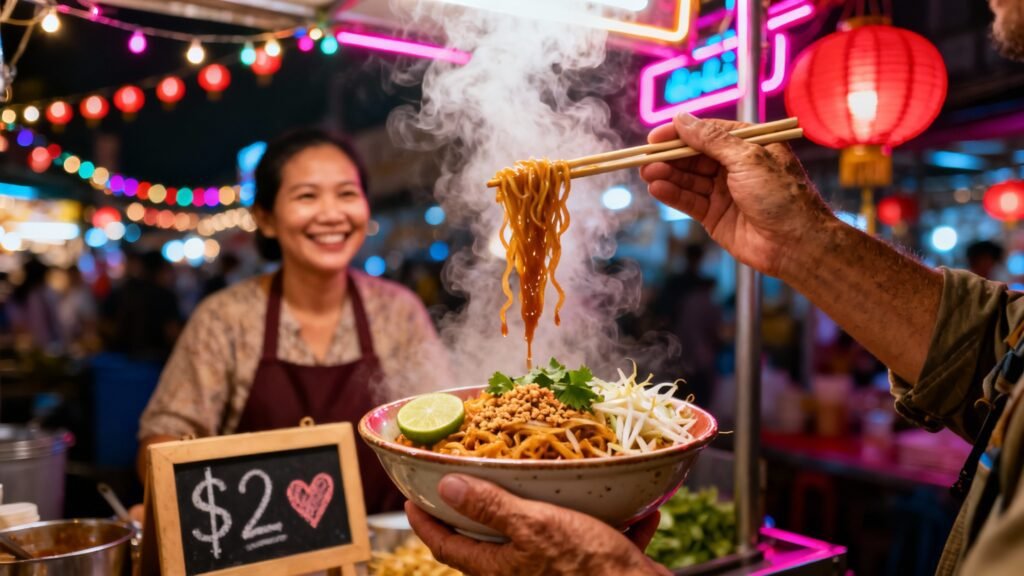
- Street Food Saves Money: Local meals cost $1–$3 USD, and eating street food is not only budget-friendly but also offers authentic flavours and fresh ingredients.
- Cheap Transport Options: Overland buses, trains, and ferries are the most economical ways to travel, with typical rides costing $2–$15 USD; renting scooters is also affordable for short trips.
- Budget-Friendly Activities: Many top attractions—temples, beaches, and markets—are free or low-cost, allowing you to experience the region’s highlights without overspending.
- Money-Saving Strategies: Book hostels in advance, eat where locals eat, use public transport, and bargain at markets to stretch your budget further.
- Flexibility Is Key: Costs can vary by country, city, and travel style; mixing dorms and private rooms, and adjusting your itinerary, helps maximise your experience while keeping expenses low.
Introduction to the Beginner’s 30-day Southeast Asia backpacking guide
You’ve never backpacked before. You’ve never navigated a foreign bus system, slept in a hostel dorm, or ordered food when you don’t speak the language. The idea of spending 30 days in Southeast Asia with just a backpack sounds equal parts thrilling and terrifying.
Here’s what nobody tells you: Southeast Asia is specifically designed, almost accidentally, to turn anxious beginners into confident travellers. The infrastructure is forgiving. The costs are low enough that mistakes don’t bankrupt you. The backpacker trail is so well-worn that you’re never truly alone. And the cultural warmth means that even your most embarrassing moments become stories instead of disasters.
This isn’t a generic travel guide. This is a confidence-building system disguised as an itinerary – a 30-day route engineered to progressively challenge you while keeping you safely within your expanding comfort zone. By day 30, you won’t just have “survived” Southeast Asia. You’ll have become someone who travels.
Let’s build that person together.
Why Southeast Asia Is the Perfect Training Ground for First-Time Backpackers
The Psychological Safety Net That Doesn’t Exist Elsewhere
Southeast Asia occupies a unique position in the backpacking ecosystem. It’s adventurous enough to feel authentic but developed enough to catch you when you stumble. Unlike Europe (expensive mistakes) or South America (steeper language barriers), Southeast Asia offers what psychologists call “optimal challenge”, difficult enough to build competence, safe enough to encourage risk-taking.
The infrastructure advantage: Every major backpacker route has English-speaking hostel staff, tourist police, and a critical mass of other travellers who made the same rookie mistakes yesterday. When you inevitably book the wrong bus or lose your way in a night market, there’s always someone, local or traveller, who can help you course-correct.
The financial cushion: In most of Southeast Asia, a catastrophic mistake costs $20, not $200. Booked the wrong hostel? Eat the cost and book another. Missed your bus? The next one leaves in two hours and costs $8. This financial forgiveness creates psychological permission to experiment, which is exactly how confidence develops.
The community effect: The “Banana Pancake Trail”, the well-established backpacker route through Thailand, Laos, Cambodia, and Vietnam, means you’re never the only beginner. Hostels are filled with people on day 3 of their first trip, happy to share what they just learned. This peer learning accelerates your competence curve faster than any guidebook.
How Southeast Asia Builds Travel Confidence Faster Than Other Regions
Confidence isn’t built through comfort; it’s built through successfully navigating discomfort. Southeast Asia provides a calibrated discomfort gradient that other regions can’t match.
Week 1 challenges: Navigating Bangkok’s Skytrain system, bargaining at a night market, and ordering street food by pointing.
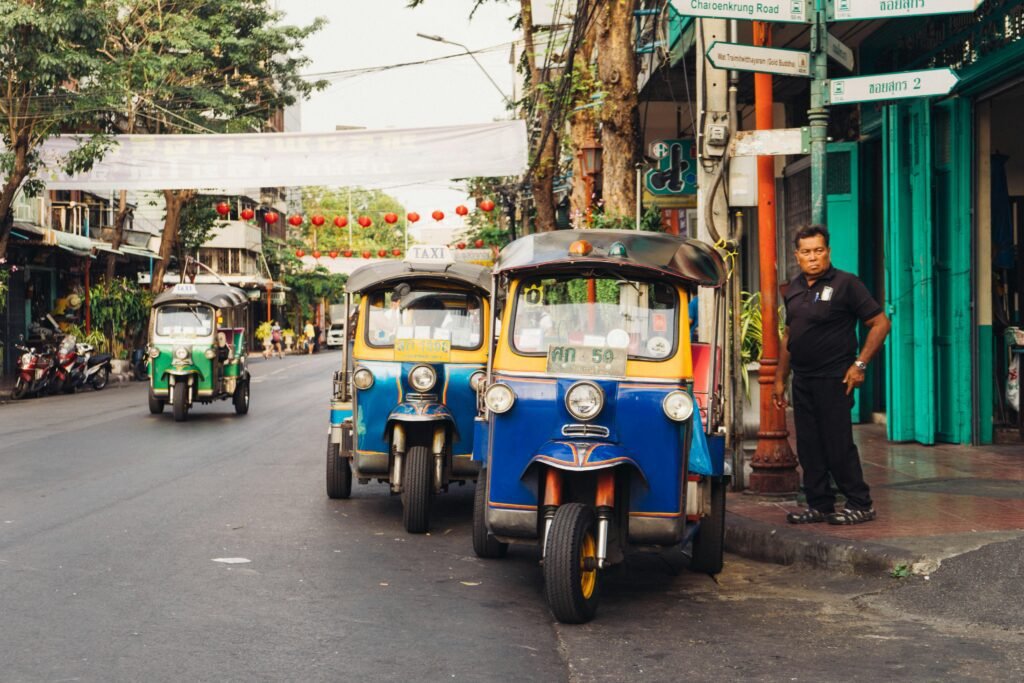
Week 2 challenges: Taking a local bus in Cambodia, visiting temples with complex dress codes, and handling aggressive tuk-tuk drivers.
Week 3 challenges: Crossing the street in Hanoi (genuinely intimidating), navigating language barriers in smaller Vietnamese cities, and booking transport without English signage.
Week 4 challenges: Travelling in Laos, where tourist infrastructure thins out, making friends with locals who don’t speak English, and trusting your instincts in unfamiliar situations.
Each week compounds the previous week’s skills. By day 30, you’re unconsciously competent at things that terrified you on day 1. This is the confidence-building architecture that makes Southeast Asia the ideal beginner destination.
What “No Experience Required” Actually Means (And What You Still Need to Learn)
Let’s be precise about what you don’t need:
- Previous backpacking experience
- Foreign language skills
- Navigation expertise
- Extensive travel history
- A travel companion (solo is completely viable)
- Advanced booking skills
- Cultural knowledge beyond basic respect
What you do need:
- Basic smartphone literacy (maps, translation apps, booking platforms)
- Willingness to feel uncomfortable for 3-5 days while you acclimate
- Enough humility to ask for help
- A functioning credit/debit card and $2,000-2,500 in accessible funds
- Physical ability to walk 3-5 miles per day and carry a 15-20 lb backpack
- Emotional resilience to handle occasional loneliness or frustration
The gap between these two lists is what this guide fills. Everything else is learnable on the ground, in real-time, with immediate feedback. That’s the promise of Southeast Asia for beginners.
The Beginner-Proof 30-Day Route: Easy Mode to Adventure Mode
This route is sequenced intentionally. Each destination builds specific skills you’ll need for the next one. Don’t rearrange it unless you have a compelling reason. The progressive difficulty curve is the entire point.

Week 1: Thailand (Bangkok + Chiang Mai) — Tourist Infrastructure Training Wheels
Days 1-4: Bangkok
Bangkok is overwhelming by design, but it’s the perfect controlled chaos to start your journey. The city has world-class public transportation (BTS Skytrain, MRT subway), English signage everywhere, and enough tourists that you’ll never feel alone.
Your Week 1 learning objectives:
- Master the art of hostel check-in and dorm room etiquette
- Navigate public transportation using Google Maps
- Order food without a common language (pointing, smiling, Google Translate)
- Exchange money and use ATMs without getting scammed
- Adjust to the heat, humidity, and sensory overload
- Make your first hostel friends (easier than you think)
What to do in Bangkok: Don’t try to see everything. Focus on building operational competence. Visit the Grand Palace (teaches you temple dress codes and ticket-buying), explore Khao San Road (backpacker central – you’ll feel the community immediately), take a boat on the Chao Phraya River (public transport on water), and eat street food in Chinatown (your taste buds’ initiation).
Budget reality check: Expect to spend $30-40/day in Bangkok. You’re still learning what things should cost, so you’ll overpay occasionally. That’s tuition, not failure.
Days 5-7: Chiang Mai
Take an overnight bus or budget flight north to Chiang Mai. This is your first inter-city transport challenge: booking it, finding the station/airport, and navigating departure procedures.
Chiang Mai is Bangkok’s gentler cousin: smaller, walkable, filled with digital nomads and long-term travellers who remember being beginners. The pace is slower. The air is cleaner. You can breathe here.
Your Chiang Mai objectives:
- Book and complete your first organised tour (elephant sanctuary, cooking class, or temple circuit)
- Rent a scooter (optional but transformative for confidence – take it slow)
- Navigate the Old City on foot using offline maps
- Experience night markets without the Bangkok intensity
- Reflect on how much you’ve already learned in 5 days
The psychological milestone: By day 7, you’ll have your first moment of “I’m actually doing this.” It usually happens in a quiet moment, eating pad thai alone at a street stall, watching sunset from a temple, or laughing with hostel friends you met 48 hours ago. Notice it. That’s confidence forming.

Week 2: Cambodia (Siem Reap + Phnom Penh) — Stepping Outside the Comfort Zone
Days 8-11: Siem Reap
Cross your first international border. Whether you fly or take a bus from Bangkok, this is a significant psychological threshold. You’re leaving the country where you built your initial competence and entering new territory.
Cambodia is poorer than Thailand. The infrastructure is rougher. The tuk-tuk drivers are more aggressive. Poverty is more visible. This is intentional discomfort you’re learning that “different” doesn’t mean “dangerous.”
Siem Reap learning objectives:
- Navigate a city with less English signage
- Handle persistent tuk-tuk solicitation without anxiety or rudeness
- Manage expectations around accommodation quality (it’s fine, just different)
- Visit Angkor Wat (your first major bucket-list achievement)
- Process visible poverty without guilt paralysis or saviour complex
The Angkor Wat experience: Hire a tuk-tuk driver for sunrise at Angkor Wat. Yes, it’s touristy. Yes, it’s worth it. This is your first “I can’t believe I’m here” moment. Take the photo. Feel the feeling. This is why you came.
Budget note: Angkor Wat passes are expensive by regional standards ($37 for one day, $62 for three days). Budget accordingly. Everything else in Siem Reap is cheap.
Days 12-14: Phnom Penh
Take a bus to Phnom Penh. The journey is 5-6 hours through rural Cambodia, your first extended ground transport experience.
Phnom Penh is grittier than Siem Reap. It’s a real capital city, not a tourist town. The traffic is chaotic. The history is heavy (Killing Fields, S-21 Prison). This is where you learn that travel isn’t always fun – sometimes it’s important.
Phnom Penh objectives:
- Navigate a city without a clear tourist centre
- Visit emotionally difficult historical sites (builds emotional range)
- Use local transportation (tuk-tuks, motorbike taxis) with confidence
- Eat at local restaurants where you’re the only foreigner
- Reflect on the difference between tourism and travel
The emotional challenge: The Killing Fields and S-21 are devastating. You’ll leave feeling heavy. This is part of becoming a traveller, holding space for difficult histories. Don’t skip it because it’s uncomfortable. Discomfort is the curriculum.
Week 3: Vietnam (Hanoi + Ha Long Bay + Hoi An) — Navigating Language Barriers
Days 15-17: Hanoi
Fly or take an overnight bus to Hanoi. Vietnam is where the training wheels come off. English proficiency drops. The traffic is legendary (crossing the street is a legitimate skill). The culture is less overtly tourist-friendly.
This is exactly what you need on day 15. You’re ready.
Hanoi learning objectives:
- Navigate a city where English is limited
- Cross streets with no traffic lights (walk slowly and steadily traffic flows around you)
- Use Google Translate’s camera function for menus and signs
- Eat pho for breakfast like a local
- Book a Ha Long Bay tour from competing operators (negotiation practice)
The confidence marker: When you successfully order a meal in a restaurant with zero English and it arrives correctly, you’ll feel a surge of competence. That’s your brain rewiring from “I can’t do this” to “I can figure this out.”
Days 18-19: Ha Long Bay
Take a 2-day/1-night cruise through Ha Long Bay. This is your first multi-day tour with strangers. You’ll sleep on a boat, eat communal meals, and kayak through limestone karsts.
Why this matters: Group tours teach you how to be a good travel companion, flexible, positive, and culturally respectful. These are social skills that make solo travel easier because you become someone other travellers want to befriend.
Days 20-23: Hoi An
Fly to Da Nang and transfer to Hoi An (30-minute drive). Hoi An is the reward for surviving Hanoi, a UNESCO World Heritage town with lantern-lit streets, incredible food, and beaches nearby.
Hoi An objectives:
- Rent a bicycle and explore rice paddies and beaches independently
- Get custom clothes made (Hoi An’s speciality – cheap and fun)
- Take a cooking class (you’ll make friends and learn recipes)
- Process how much your confidence has grown since Bangkok
- Rest and recharge before the final week
The midpoint reflection: You’re two-thirds through. You’ve crossed three countries. You’ve navigated buses, boats, and planes. You’ve made friends and eaten strange foods and survived discomfort. You’re not the same person who landed in Bangkok 20 days ago.
Week 4: Laos (Luang Prabang + Vang Vieng) — Off-the-Beaten-Path Confidence Test
Days 24-27: Luang Prabang
Fly from Da Nang to Luang Prabang (via Bangkok or Hanoi). Laos is the final exam. It’s the least developed country on this route. Tourism infrastructure exists, but it’s thinner. English is less common. The pace is slower.
If you can navigate Laos, you can navigate anywhere in Southeast Asia.
Luang Prabang learning objectives:
- Thrive in a city with minimal tourist infrastructure
- Wake up for the alms-giving ceremony (4:30 AM – cultural immersion)
- Visit Kuang Si Waterfalls independently using local transport
- Spend a day doing nothing (learning to be bored is a travel skill)
- Reflect on your transformation over 24 days
The spiritual element: Luang Prabang has a contemplative energy. Temples everywhere. Monks in saffron robes. The Mekong River flows past. This is where many travellers have their “why am I doing this?” epiphany. The answer is usually: to become more fully yourself.
Days 28-30: Vang Vieng
Take a 4-hour bus south to Vang Vieng. This town has a complicated reputation (former party destination, now transitioning to adventure tourism), but it’s perfect for your final days.
Final objectives:
- Do something physically challenging (rock climbing, kayaking, caving)
- Celebrate your 30-day milestone with other travellers
- Book your onward travel (home or to your next destination)
- Journal about who you were on day 1 vs. who you are on day 30
The completion ritual: On your final night, find a riverside bar, order a Beer Lao, and watch the sunset. You did it. You’re a backpacker now.
The Pre-Trip Checklist: What to Do 90 Days Before You Leave
Confidence starts before you board the plane. Here’s the exact preparation sequence that prevents 90% of beginner anxiety.
90 Days Out: Passport and Visa Preparation
Passport check: Your passport must be valid for at least 6 months beyond your planned return date. This is non-negotiable. Most Southeast Asian countries won’t let you enter otherwise.
Don’t have a passport? Apply immediately. Processing takes 6-10 weeks in most countries.
Visa requirements by country (as of October 2025):
- Thailand: 60-day visa exemption for most Western nationalities (free on arrival)
- Cambodia: 30-day visa on arrival ($30 USD, bring a passport photo)
- Vietnam: 45-day visa exemption for most Western nationalities (recently extended)
- Laos: 30-day visa on arrival ($30-42 USD depending on nationality)
Pro tip: Visa policies change frequently. Check your specific nationality’s requirements 30 days before departure on official embassy websites, not travel blogs.
60 Days Out: Vaccines and Health Preparation
Required vaccines: None are legally required for Southeast Asia unless you’re arriving from a yellow fever zone.
Recommended vaccines (consult your doctor):
- Hepatitis A and B (food/water-borne protection)
- Typhoid (food/water-borne protection)
- Tetanus/Diphtheria booster (if not current)
- Japanese Encephalitis (only if spending extended time in rural areas)
- Rabies (only if you’ll be handling animals or far from medical care)
Cost reality: Expect $200-400 for the full vaccine series. Many insurance plans cover travel vaccines – check first.
Malaria consideration: Malaria risk is low in most backpacker destinations (cities and tourist areas). Antimalarial medication has side effects. Most travellers skip it. Discuss with your doctor based on your specific itinerary.
What to pack in your medical kit:
- Imodium (for diarrhoea – you will need this)
- Oral rehydration salts
- Basic pain reliever (ibuprofen or acetaminophen)
- Antihistamine (for allergic reactions)
- Band-aids and antibiotic ointment
- Any prescription medications (bring 2x what you need)
- Sunscreen (expensive in Southeast Asia)
45 Days Out: Travel Insurance (The Non-Negotiable)
Why you need it: Medical evacuation from Southeast Asia to your home country can cost $50,000-100,000. A hospital stay for dengue fever can cost $2,000-5,000. Your regular health insurance probably doesn’t cover you abroad.
What to look for in backpacker insurance:
- Medical coverage: minimum $100,000
- Emergency evacuation: minimum $250,000
- Trip cancellation/interruption
- Lost/stolen belongings (including electronics)
- Adventure activity coverage (if you’ll do scuba diving, rock climbing, etc.)
Recommended providers for backpackers:
- World Nomads: $80-120 for 30 days, designed for backpackers, covers adventure activities
- Safety Wing: $45-65 for 30 days, popular with digital nomads, monthly subscription model
- True Traveller: $70-100 for 30 days, UK-based, excellent coverage
The claim reality: Most travellers never file a claim. That’s not the point. Insurance is for the 1% scenario that would otherwise ruin you financially. Buy it.
30 Days Out: Banking and Money Setup
Credit card preparation:
- Get a credit card with no foreign transaction fees (Chase Sapphire, Capital One Venture, etc.)
- Call your bank to set a travel notification (prevents fraud blocks)
- Memorise your PIN (you’ll need it for ATM withdrawals)
- Set up mobile banking app access
ATM strategy: Use ATMs attached to major banks (Bangkok Bank, Vietcombank, ANZ) to minimise skimming risk. Withdraw larger amounts less frequently to reduce per-transaction fees. Expect $3-7 in fees per withdrawal.
Cash considerations: Bring $200-300 USD in clean, new bills (for visa on arrival, emergencies, and places that prefer USD). Keep it separate from your daily money.
What not to do: Don’t exchange money at airports (terrible rates). Don’t carry all your money in one place. Don’t use credit cards at sketchy establishments (skimming risk).
14 Days Out: Accommodation and Flight Booking
Flight strategy: Book your flight into Bangkok (most connections, cheapest entry point). Consider booking only a one-way ticket or an open-jaw ticket (into Bangkok, out of Luang Prabang or Hanoi) for maximum flexibility.
Budget expectation: $600-1,200 for flights from North America/Europe, depending on season and how far in advance you book.
Accommodation philosophy: Book only your first 3 nights in Bangkok. After that, book 1-2 days ahead as you go. This flexibility is crucial for beginner confidence, you’re not locked into a rigid itinerary.
Where to book:
- Hostelworld: Best for hostels, shows real-time availability, good reviews
- Booking.com: Better for private rooms and guesthouses, often cheaper than Hostelworld
- Agoda: Popular in Asia, sometimes has better deals than Booking.com
What to look for in beginner-friendly hostels:
- Rating above 8.0
- “Social atmosphere” mentioned in reviews
- Female-only dorms available (if relevant)
- Lockers in rooms (for valuables)
- Common area for meeting people
- Location near public transport
7 Days Out: Apps and Digital Preparation
Essential apps to download before you leave:
- Maps.me: Offline maps that work without data (lifesaver)
- Google Translate: Download Thai, Khmer, Vietnamese, and Lao for offline use
- Google Maps: For online navigation and business reviews
- Grab: Southeast Asia’s Uber (safer and cheaper than tuk-tuks)
- XE Currency: Real-time currency conversion
- Hostelworld or Booking.com: For booking accommodation on the go
- WhatsApp: How you’ll communicate with other travellers and some businesses
Digital copies: Photograph or scan your passport, insurance card, credit cards, and vaccine records. Email them to yourself and save them in cloud storage.
Phone setup: Unlock your phone if it’s carrier-locked. You’ll buy local SIM cards in each country ($5-15 for 30 days of data).
Packing for Beginners: The 40L Backpack Formula (Not a Suitcase)
The single biggest mistake beginners make: packing too much. You’re going to Southeast Asia, not Antarctica. You can buy almost anything you forgot for $2-10.
The Backpack Itself: Size and Features
Optimal size: 40-50 litres. Anything larger and you’ll overpack. Anything smaller and you’ll struggle to fit 30 days of gear.
Recommended brands for beginners:
- Osprey Farpoint 40: $160, carry-on sized, comfortable, durable
- REI Trail 40: $130, budget-friendly, good for beginners
- Tortuga Setout: $230, premium option, opens like a suitcase
What to look for:
- Hip belt (transfers weight from shoulders to hips)
- Sternum strap (stabilises load)
- Lockable zippers (hostel security)
- Laptop compartment (if you’re bringing one)
- Comfortable on your body when fully loaded (try it in the store)
The daypack: Bring a 15-20L packable daypack for daily excursions. It should fold into your main pack when not in use.
The 15-Item Capsule Wardrobe (30 Days, All Climates)
Southeast Asia is hot and humid. You’ll sweat through clothes daily. Pack for laundry every 3-4 days (hostels have laundry service for $1-3 per kilo).
Clothing list:
- 4 t-shirts (quick-dry fabric, not cotton)
- 2 tank tops (for extreme heat)
- 1 long-sleeve shirt (sun protection, temple coverage, air-conditioned buses)
- 2 pairs of shorts (one athletic, one casual)
- 1 pair of lightweight pants (temples require covered legs)
- 1 sarong or large scarf (temple coverage, beach blanket, towel substitute)
- 7 pairs of underwear (quick-dry)
- 4 pairs of socks (you’ll wear sandals 90% of the time)
- 1 swimsuit
- 1 light rain jacket (compact, packable)
- 1 fleece or hoodie (for cold buses and northern Thailand nights)
- Sandals (Tevas, Chacos, or Birkenstocks—you’ll live in these)
- Sneakers or trail shoes (for hiking and temple walking)
- Flip-flops (for hostel showers)
- Sleepwear (lightweight shorts and t-shirt)
What not to bring: Jeans (too hot, too heavy), more than 2 pairs of shoes, anything you’d be devastated to lose, excessive toiletries (buy there), hair dryer (won’t work with voltage), towel (hostels provide them or you can buy a travel towel for $10).
Tech Essentials: What Actually Matters
The core four:
- Smartphone: Your navigation, translation, booking, and communication device. Bring a portable charger (10,000+ mAh).
- Universal adapter: Southeast Asia uses multiple plug types (A, C, and G). Get a universal adapter with USB ports ($15-25).
- Headphones: For buses, flights, and hostel dorms. Noise-cancelling is a luxury worth considering.
- E-reader or tablet (optional): For long bus rides and beach days. Kindle Paperwhite is perfect.
What you probably don’t need: Laptop (unless you’re working remotely), camera (your phone is fine for beginners), GoPro (rent one if you do adventure activities), travel speaker, hair straightener.
First-Aid and Hygiene: What You Actually Need
Toiletries (buy travel sizes or refill at destination):
- Toothbrush and toothpaste
- Deodorant (hard to find in Asia—bring from home)
- Shampoo and soap (or use hostel-provided)
- Sunscreen SPF 50+ (bring from home—expensive in Asia)
- Insect repellent with DEET (essential for dengue/malaria prevention)
- Razor
- Feminine hygiene products (available everywhere, but bring your preferred brand)
- Contact lens solution (if applicable)
First-aid kit (fits in a quart-sized bag):
- Imodium (anti-diarrheal – you will need this)
- Oral rehydration salts
- Pain reliever
- Antihistamine
- Band-aids
- Antibiotic ointment
- Tweezers (for splinters)
- Any prescription medications
The “Buy It There” Philosophy
You will forget something. That’s fine. Southeast Asia has 7-Elevens every 200 meters. You can buy:
- Toiletries (shampoo, soap, toothpaste)
- Clothing (t-shirts, shorts, sandals)
- Phone chargers and adapters
- Sunscreen and bug spray (though quality varies)
- Over-the-counter medications
- Snacks and water
What you can’t easily buy: deodorant (Asian formulations are different), tampons (pads are more common), specific prescription medications, quality sunscreen, and your preferred contact lens solution.
The packing test: Pack everything, then remove 30%. You’ll still have too much, but you’ll be closer to optimal.
Booking Your First Backpacking Trip: Flights, Hostels, and Transport
How to Book a One-Way Ticket Without Freaking Out
The psychological barrier: Booking a one-way ticket to Bangkok feels reckless. You’re conditioned to book round-trip flights with fixed dates. But backpacking requires flexibility.
The practical approach:
- Option 1: Book a one-way ticket to Bangkok. Book your return flight once you’re there and know your actual plans. (Most flexible, slightly more expensive)
- Option 2: Book an open-jaw ticket (into Bangkok, out of Hanoi or Luang Prabang). (Good compromise between flexibility and cost)
- Option 3: Book a round-trip ticket with a flexible change policy. (Least flexible, but psychologically easier for beginners)
Proof of onward travel: Some countries technically require proof of onward travel (a flight out of the country) before they let you enter. In practice, this is rarely enforced for Western tourists in Southeast Asia. If you’re worried, book a refundable flight or use a service like BestOnwardTicket.com ($12 for a 48-hour rental ticket).
Budget Hostel Booking Strategy: When to Pre-Book vs. Walk-In
The beginner-friendly approach:
- Pre-book: Your first 3 nights in Bangkok (you’ll be jet-lagged and overwhelmed – eliminate one decision)
- Book 1-2 days ahead: For the rest of your trip, book hostels 1-2 days before you arrive
- Walk-in: Only in low season or small towns where availability is guaranteed
Why not pre-book everything? Flexibility is freedom. You’ll meet travellers who recommend a hostel in the next city. You’ll want to stay an extra day somewhere. You’ll want to leave early from somewhere else. Pre-booking eliminates these options.
How to choose a hostel in 3 minutes:
- Filter by rating (8.0+ on Hostelworld)
- Read the 3 most recent reviews (look for “social,” “clean,” “safe”)
- Check location (near public transport or walkable to main attractions)
- Verify they have lockers and your preferred dorm type
- Book it
Dorm vs. private room: Start with dorms. They’re cheaper ($8-15/night vs. $20-35 for private) and force you to meet people. Switch to private rooms when you need a break from socialising (usually around day 15-20).
The “Book First 3 Nights Only” Rule for Flexibility
This rule is non-negotiable for beginners. Here’s why:
Day 1-3 in Bangkok: You’re jet-lagged, disoriented, and adjusting. Having a pre-booked bed eliminates decision fatigue when you’re least capable of making good decisions.
Day 4 onward: You’ve met other travellers. You’ve learned what you value in accommodation. You’ve developed opinions about location vs. price vs. social atmosphere. Now you can make informed booking decisions.
The flexibility advantage: On day 5, you meet travellers heading to an island you’ve never heard of. They rave about it. If you’ve pre-booked the next 25 nights, you can’t join them. If you’ve only booked 1-2 days ahead, you can pivot.
Backpacking is about following opportunities. Pre-booking is the enemy of opportunity.
Cheapest Flights Between Countries (And When to Book)
The regional budget airlines:
- AirAsia: Largest budget carrier, flies everywhere, frequent sales
- VietJet: Vietnam-focused, very cheap, very basic
- Nok Air: Thailand-focused, slightly more comfortable than AirAsia
- Bangkok Airways: Not budget, but sometimes competitive on island routes
Booking strategy:
- Book flights 2-4 weeks in advance for the best prices
- Be flexible with dates (flying Tuesday vs. Saturday can save $30-50)
- Fly early morning (cheaper and you don’t lose a day of travel)
- Book directly on airline websites (avoid third-party booking fees)
Cost expectations:
- Bangkok to Siem Reap: $60-100
- Siem Reap to Hanoi: $80-150
- Hanoi to Luang Prabang: $100-180
- Da Nang to Bangkok: $80-140
Bus vs. flight calculation: Buses are cheaper ($15-30) but take 6-12 hours. Flights are faster but cost $60-150. Your time has value. For distances over 300km, fly. For shorter distances or overnight routes, take the bus.
The overnight bus hack: Overnight buses save you a night of accommodation ($10-15), and you arrive in the morning ready to explore. Bring earplugs, an eye mask, and low expectations for sleep quality.
Beginner Safety Protocols: The Non-Paranoid Guide
Southeast Asia is safe. Statistically safer than most Western cities. But “safe” doesn’t mean “risk-free.” Here’s how to be smart without being scared.
Solo Female Backpacker Safety Tweaks
Accommodation upgrades worth the extra $3/night:
- Female-only dorms (more comfortable, better sleep, less harassment)
- Hostels with 24-hour reception (someone is always there if you need help)
- Locations in well-lit, populated areas (avoid hostels down dark alleys)
Transport safety:
- Use Grab instead of random tuk-tuks (tracked, rated, safer)
- Sit near the driver on buses (easier to get help if needed)
- Avoid overnight buses if you’re uncomfortable (fly instead)
- Share your location with a friend or family member when taking transport
Social safety:
- Trust your instincts (if someone feels off, they probably are)
- Drink conservatively (you’re in an unfamiliar environment)
- Tell hostel staff where you’re going and when you’ll be back
- Make friends with other solo female travellers (built-in safety network)
The reality check: Thousands of solo female travellers backpack Southeast Asia every year without incident. The biggest risks are petty theft and traffic accidents, not violent crime. Be aware, not afraid.
Common Scams and How to Spot Them (Without Becoming Cynical)
The tuk-tuk commission loop (Thailand, Cambodia):
How it works: A friendly tuk-tuk driver offers to take you sightseeing for an impossibly low price ($5 for the whole day). The catch: he takes you to gem shops, tailor shops, or massage parlours where he gets a commission if you buy anything.
How to avoid it: If the price seems too good to be true, it is. Negotiate a fair price ($15-20 for a half-day) and specify “no shopping stops.” Use Grab when possible.
The “closed today” scam (Thailand):
How it works: You’re walking to the Grand Palace. A well-dressed local tells you it’s closed today (it’s not) and offers to take you to another temple instead, one that pays him a commission.
How to avoid it: Verify closures on official websites or Google Maps reviews. Politely decline unsolicited help.
Fake police and “fines” (Vietnam, Laos):
How it works: Someone claiming to be a police officer stops you and demands to see your passport or claims you’ve violated a law. They threaten a fine unless you pay cash immediately.
How to avoid it: Real police rarely stop tourists randomly. Ask to go to the police station to pay any fine. Scammers will disappear. Never hand over your passport.
Overpriced tours disguised as “local experiences”:
How it works: A hostel or travel agency sells you a “local” tour that’s actually a generic tourist experience at 3x the price.
How to avoid it: Compare prices across multiple agencies. Read recent reviews. Ask other travellers what they paid.
The mindset shift: Most locals are genuinely helpful. Scams are rare and usually low-stakes (you lose $10, not $1,000). Don’t let fear of scams prevent you from trusting people. Just be aware of common patterns.
The “Buddy System” for Solo Travellers (How to Make Instant Friends in Hostels)
The hostel common room strategy:
- Arrive at your hostel between 4-7 PM (when people are hanging out before dinner)
- Sit in the common area with your phone/book (you’re approachable but not desperate)
- Make eye contact and smile when people walk by
- Ask simple questions: “Have you been here long?” “Any recommendations for dinner?”
- Invite yourself along: “I’m heading to the night market – want to come?”
The dorm room approach:
- Introduce yourself when you enter the room
- Ask your dorm-mates where they’re from and where they’re headed
- Suggest grabbing dinner or drinks together
The tour/activity method:
- Book group activities (cooking classes, day tours, pub crawls)
- You’re automatically spending 4-8 hours with the same people
- Exchange WhatsApp numbers and make plans for the next city
The psychological truth: Everyone in the hostel is looking for friends. Solo travellers are the easiest people to befriend because they’re actively seeking connection. You’re not imposing, you’re fulfilling a mutual need.
When you need alone time: It’s okay to skip the group dinner. It’s okay to spend a day alone. Backpacking is about balance, social connection and solitary reflection. Honour both needs.
Emergency Contacts, Embassy Locations, and the “What If” Plan
Before you leave, save these numbers in your phone:
- Your country’s embassy in Thailand, Cambodia, Vietnam, and Laos
- Your travel insurance emergency hotline (available 24/7)
- A trusted friend or family member back home (your emergency contact)
Embassy locations (major cities):
- Bangkok: Most countries have embassies here
- Hanoi: Major embassies for Vietnam
- Phnom Penh: Embassies for Cambodia
- Vientiane: Embassies for Laos (not Luang Prabang)
What embassies can do:
- Replace a lost/stolen passport (emergency travel document)
- Provide a list of local doctors/lawyers
- Contact family in an emergency
- Provide information about local laws
What embassies cannot do:
- Pay for your medical bills or flights home
- Get you out of jail
- Investigate crimes
- Store your luggage
The “what if” plan:
- What if I get seriously sick? Call your travel insurance hotline. They’ll direct you to a vetted hospital and handle billing.
- What if I lose my passport? File a police report (required for replacement). Contact your embassy. They’ll issue an emergency travel document ($100-200).
- What if I run out of money? Contact family for a wire transfer (Western Union, MoneyGram). Most hostels will let you work for accommodation if you’re truly stuck.
- What if I want to go home early? Book a flight. There’s no shame in cutting a trip short. Your mental health matters more than completing an arbitrary itinerary.
The confidence paradox: Having a “what if” plan makes emergencies less likely because you’re not operating from a place of anxiety. Anxiety causes mistakes. Preparedness creates calm.
Daily Budget Breakdown: How Much You’ll Actually Spend
Let’s get specific. Here’s what 30 days in Southeast Asia actually costs, broken down by category with real-world examples.
Accommodation: $8-15/Night (Dorm vs. Private Room Math)
Hostel dorm bed:
- Bangkok: $10-15/night
- Chiang Mai: $8-12/night
- Siem Reap: $6-10/night
- Hanoi: $8-12/night
- Luang Prabang: $8-12/night
Private room in hostel/guesthouse:
- Bangkok: $20-35/night
- Chiang Mai: $15-25/night
- Siem Reap: $12-20/night
- Hanoi: $18-30/night
- Luang Prabang: $15-25/night
30-day accommodation cost:
- All dorms: $270-360
- Mix of dorms and private rooms: $360-480
- All private rooms: $480-750
The upgrade decision: Most backpackers start in dorms and switch to private rooms around day 15-20 when they need better sleep and personal space. This is normal and healthy.
Food: $5-10/Day (Street Food vs. Restaurant Strategy)
Street food meal: $1-3 (pad thai, banh mi, fried rice, noodle soup)
- Local restaurant meal: $3-6 (sit-down meal with drink)
- Western food/tourist restaurant: $8-15 (pizza, burger, pasta)
- Beer: $1-2 (local beer at a local spot), $3-5 (tourist area or imported)
- Coffee: $1-2 (local iced coffee), $3-5 (Western-style cafe)
Daily food budget breakdown:
- Budget mode ($5/day): Street food for all meals, local beer, no cafes
- Comfortable mode ($10/day): Mix of street food and restaurants, occasional Western meal, coffee and beer
- Splurge mode ($20/day): Restaurant meals, Western food, multiple drinks, nice cafes
30-day food cost:
- Budget: $150
- Comfortable: $300
- Splurge: $600
The reality: You’ll spend $7-12/day on average. Some days you’ll eat street food for $5 total. Other days, you’ll splurge on a nice dinner and drinks for $25. It balances out.
Food safety note: Street food is safe if you follow two rules: (1) eat where locals eat, and (2) eat food that’s cooked fresh in front of you. You’ll probably get mild diarrhoea regardless. That’s the “Southeast Asia initiation.” It passes in 24-48 hours.
Transport: $3-20/Day (Local Bus vs. Tourist Shuttle vs. Flights)
Daily local transport:
- City bus/songthaew: $0.30-1
- Tuk-tuk (short ride): $2-5
- Grab/motorbike taxi: $1-4
- Bicycle rental: $2-5/day
- Scooter rental: $5-10/day
Inter-city transport:
- Local bus (4-6 hours): $5-15
- Tourist bus (4-6 hours): $10-20
- Overnight bus: $15-30
- Budget flight: $60-150
30-day transport cost:
- Daily local transport: $90-300 (averaging $3-10/day)
- Inter-city transport: $200-500 (mix of buses and flights)
- Total transport: $290-800
The transport philosophy: Spend money on comfort for long journeys. A $100 flight that saves you 10 hours on a bus is worth it. Your time and energy have value.
Activities: $0-30/Day (Free Walking Tours vs. Bucket-List Splurges)
Free activities:
- Walking around cities
- Temples (many are free or $1-2)
- Markets
- Beaches
- Hiking
- Hostel events
Budget activities ($5-15):
- Cooking classes: $15-25
- Bicycle tours: $10-20
- Massage: $5-10/hour
- Museum entry: $2-5
Splurge activities ($30-100):
- Angkor Wat pass: $37-62
- Ha Long Bay cruise: $80-150
- Scuba diving: $60-100
- Multi-day treks: $50-150
30-day activity cost:
- Budget (mostly free activities, 2-3 splurges): $150-250
- Moderate (mix of free and paid, 4-5 splurges): $300-450
- Splurge (doing everything): $600-900
The priority framework: Decide your 3-5 non-negotiable experiences (Angkor Wat, Ha Long Bay, cooking class, etc.) and budget for those. Everything else is optional.
Total 30-Day Budget: $1,500-2,500 (With Contingency Buffer)
Budget breakdown:
- Ultra-budget: $1,500 (dorms, street food, buses, minimal activities)
- Comfortable: $2,000 (mix of dorms/private rooms, restaurant meals, some flights, key activities)
- Moderate splurge: $2,500 (private rooms, regular restaurant meals, flights, most activities)
What this doesn’t include:
- International flights ($600-1,200)
- Travel insurance ($80-120)
- Visas ($60-100)
- Pre-trip vaccines ($200-400)
- Shopping and souvenirs (budget separately)
Total trip cost including flights and prep: $2,500-4,500
The contingency buffer: Add 20% to your budget for unexpected expenses (medical issues, lost items, spontaneous opportunities). If you budget $2,000, bring access to $2,400.
How to track spending: Use an app like Trail Wallet or a simple spreadsheet. Log expenses daily. This prevents budget creep and helps you adjust in real-time.
The Beginner’s Mindset: How to Handle Overwhelm, Loneliness, and Homesickness
The practical logistics are the easy part. The emotional journey is what actually transforms you. Here’s what to expect and how to navigate it.
Culture Shock Timeline: What to Expect in Weeks 1, 2, 3, 4
Week 1: The Honeymoon Phase
Everything is exciting. The food is exotic. The temples are beautiful. The hostel friends are amazing. You’re running on adrenaline and novelty. You take 500 photos. You WhatsApp everyone back home about how incredible this is.
What’s actually happening: Your brain is in high-stimulation mode. You’re not processing, you’re consuming. This is normal and fun. Enjoy it.
Week 2: The Disillusionment Dip
The novelty wears off. You’re tired of being hot and sweaty. The language barrier is frustrating. You miss your own bed. You have a bad day where nothing goes right. You wonder why you’re doing this.
What’s actually happening: Your brain is adjusting to the new normal. The adrenaline is fading. You’re processing the discomfort you’ve been ignoring. This is the most common time for beginners to want to quit.
How to handle it: Don’t make big decisions on bad days. Take a rest day. Eat familiar food. Video call a friend. Book a private room for better sleep. This phase passes in 2-3 days.
Week 3: The Adjustment Phase
You’ve developed routines. You know how to order food, book hostels, and navigate cities. You’re not thinking about logistics constantly; you’re actually experiencing the place. You make deeper friendships. You have moments of genuine joy.
What’s actually happening: You’re becoming competent. Confidence is building. You’re transitioning from tourist to traveller.
Week 4: The Integration Phase
You can’t imagine going home. You’re considering extending your trip. You’re giving advice to newer travellers. You feel comfortable in discomfort. You’re planning your next trip before this one ends.
What’s actually happening: You’ve internalised the identity shift. You’re a backpacker now. This is who you are.
The “3-Day Rule” for Every New City (Give It Time Before Judging)
The rule: Don’t judge a city in the first 24-48 hours. Give it three full days before deciding you hate it.
Why this matters: First impressions are often wrong. You arrive tired. You get lost. Your hostel is in a weird location. You have a bad meal. You conclude the city sucks.
Then on day 3, you find the perfect cafe. You meet interesting people. You stumble into a beautiful neighbourhood. You realise the city is actually great, you just needed time to find your rhythm.
The application: If you hate a place on day 1, stay through day 3. If you still hate it on day 3, leave. Life’s too short to stay somewhere that doesn’t resonate. But give it a fair chance first.
The exception: If a place feels genuinely unsafe or your mental health is suffering, leave immediately. The 3-day rule is about giving places a chance, not forcing yourself to suffer.
How to Make Friends as a Solo Traveller (Even If You’re Introverted)
The introvert advantage: Introverts often make better solo travellers because they’re comfortable with solitude and they listen well (which makes them good friends).
Low-effort friendship strategies:
- Join hostel activities: Pub crawls, walking tours, game nights. You don’t have to initiate – just show up.
- Ask to join dinner plans: “Are you guys heading to dinner? Mind if I join?” No one says no.
- Sit in common areas: Bring a book or your phone. Be present but not desperate. People will approach you.
- Take group tours: Cooking classes, day trips, boat tours. You’re stuck together for hours – friendships form naturally.
- Use the “where are you headed next?” question: This identifies people going your direction. Suggest travelling together.
The depth vs. breadth trade-off: You’ll meet hundreds of people. Most will be 24-hour friendships (fun but fleeting). A few will become lifelong friends. Both types are valuable. Don’t force depth – let it emerge naturally.
When you need alone time: Take it. Spend a day reading on a beach. Eat dinner alone. Skip the group outing. Solitude is part of the experience. You don’t have to be “on” all the time.
When to Push Through Discomfort vs. When to Pivot
Push through when:
- You’re just tired or having a bad day (rest, don’t quit)
- You’re experiencing normal culture shock (week 2 dip)
- You’re slightly outside your comfort zone but not in danger
- You’re learning something valuable from the discomfort
Pivot when:
- You feel genuinely unsafe (trust your instincts)
- Your mental health is deteriorating (anxiety, depression, panic attacks)
- You’re not enjoying anything for more than a week straight
- You’re only travelling because you “should” finish what you started
The wisdom to know the difference: Discomfort is growth. Suffering is a signal. Learn to distinguish between the two.
The permission to quit: If you need to go home on day 15, go home. There’s no shame in recognising your limits. You can always come back. Your mental health is more important than completing an arbitrary itinerary.
Apps, Tools, and Resources Every Beginner Needs (Offline-Ready)
Your smartphone is your most important piece of gear. Here’s how to turn it into a backpacking supercomputer.
Maps.me: Offline Navigation That Actually Works
Why you need it: Google Maps requires data. Maps.me works completely offline once you download the map.
How to use it:
- Download the app before you leave
- Download maps for Thailand, Cambodia, Vietnam, and Laos (do this on WiFi—files are large)
- Use it like Google Maps: search for addresses, get walking directions, and find nearby restaurants
- Drop pins for your hostel, important landmarks, and places you want to visit
Pro tip: When you arrive at your hostel, immediately drop a pin. You’ll get lost. You’ll need to find your way back. The pin saves you.
Google Translate: The Camera Feature That Saves You Daily
Why you need it: Most menus, signs, and bus schedules aren’t in English. Google Translate’s camera feature translates text in real-time.
How to use it:
- Download offline language packs for Thai, Khmer, Vietnamese, and Lao (do this on WiFi)
- Open the app, select camera mode
- Point your camera at text (menu, sign, bus schedule)
- Watch it translate in real-time on your screen
The conversation mode: Use the microphone feature for basic conversations. Speak in English, and it translates to the local language out loud. They respond, and it translates back. It’s clunky but functional.
The reality check: Translation isn’t perfect. Sometimes it’s hilariously wrong. But it’s better than nothing, and locals appreciate the effort.
XE Currency: Stop Doing Mental Math Wrong
Why you need it: You’ll be dealing with Thai baht, Cambodian riel, Vietnamese dong, and Lao kip. The exchange rates are confusing (1 USD = 23,000 Vietnamese dong).
How to use it:
- Download the app
- Add your home currency and the four Southeast Asian currencies
- When someone quotes a price, open the app and convert it
- After a few days, you’ll internalise the rough conversions
Rough conversions to memorise:
- 1 USD = 35 Thai baht
- 1 USD = 4,000 Cambodian riel (but USD is widely accepted)
- 1 USD = 23,000 Vietnamese dong
- 1 USD = 20,000 Lao kip
Hostelworld + Booking.com: Where to Sleep Tonight
Hostelworld: Best for hostels. Shows real-time availability, bed-by-bed booking, and reviews from backpackers.
Booking.com: Better for guesthouses and private rooms. Often cheaper than Hostelworld for private accommodations.
The strategy: Check both before booking. Sometimes the same hostel is cheaper on one platform vs. the other.
How to use reviews:
- Sort by “most recent” (not highest rated)
- Read the 3 most recent reviews
- Look for mentions of cleanliness, safety, social atmosphere, and location
- Ignore reviews older than 6 months (hostels change management frequently)
Grab: Southeast Asia’s Uber (Safer Than Tuk-Tuks)
Why you need it: Grab is the dominant ride-hailing app in Southeast Asia. It’s safer, cheaper, and more transparent than negotiating with tuk-tuk drivers.
How to use it:
- Download the app
- Add a payment method (credit card or pay with cash)
- Enter your destination
- See the price upfront (no negotiation, no surprises)
- Track your ride in real-time
- Rate your driver (accountability)
Where it works: Thailand, Vietnam, Cambodia (limited in Laos)
When to use tuk-tuks instead: Short distances where Grab isn’t available, or when you want the cultural experience. Just negotiate the price before getting in.
Bonus Apps Worth Downloading
Rome2Rio: Shows all transport options between two cities (bus, train, flight) with estimated costs and times.
Trail Wallet: Simple expense tracking designed for travellers. Log spending by category, set daily budgets, and see visual breakdowns.
WhatsApp: How you’ll communicate with other travellers, hostel staff, and tour operators. Everyone in Southeast Asia uses WhatsApp.
Spotify/Podcast app: Download playlists and podcasts for long bus rides (offline mode).
What Experienced Backpackers Wish They Knew as Beginners
Let’s compress years of collective wisdom into the lessons that actually matter.
The #1 Mistake Every First-Timer Makes (Over-Planning)
The mistake: You create a detailed day-by-day itinerary for all 30 days. You pre-book all your accommodation. You research every activity. You build a spreadsheet.
Why it’s a mistake: Backpacking is about spontaneity and adaptation. The best experiences are unplanned. The travellers you meet will change your route. The places you love will make you want to stay longer. The places you hate will make you want to leave early.
The better approach: Plan the first week loosely. Know your general route (Thailand → Cambodia → Vietnam → Laos). Book only your first 3 nights. Let the rest unfold.
The wisdom: The plan is not the experience. The plan is a starting point. Give yourself permission to deviate.
Why Your First Week Will Feel Chaotic (And Why That’s Normal)
What beginners expect: Smooth execution. Confidence. Instagram-worthy moments.
What actually happens: You get lost. You overpay for things. You book the wrong bus. You feel overwhelmed. You question whether you can do this.
Why this is normal: You’re learning a new skill set in a foreign environment. Chaos is the learning process. Every mistake is data. Every confusion is a lesson.
The reframe: Chaos isn’t failure, it’s the curriculum. By day 7, you’ll laugh about the things that stressed you out on day 1.
The Moment You’ll Realise You’re Actually Doing It (Usually Day 10)
The moment: It’s different for everyone, but it usually happens around day 10-14. You’re sitting alone at a street food stall, or watching sunset from a temple, or laughing with hostel friends, and you suddenly think: “I’m actually doing this. I’m backpacking through Southeast Asia.”
Why it matters: This is the moment your identity shifts. You’re not someone who wants to travel; you’re someone who travels. This realisation is the entire point of the trip.
How to recognise it: It feels like a quiet exhale. A sense of rightness. A feeling of “I belong here.”
What to do: Notice it. Maybe journal about it. This is the moment you’ll remember when you’re 80.
Real Beginner Stories: 15 First-Timers Share Their “Aha” Moments
Sarah, 24, UK: “I realised I was a backpacker when I helped a newer traveller figure out the bus system in Chiang Mai. I’d been there for 3 days, and I was already the ‘experienced’ one. That’s when I knew I’d changed.”
Marcus, 29, USA: “Day 12 in Hoi An. I rented a bicycle and rode through rice paddies for hours without a plan. I wasn’t anxious. I wasn’t checking my phone. I was just… present. That’s when I got it.”
Priya, 26, Canada: “I was terrified of travelling alone. On day 8, I realised I’d made friends in every city. I was never actually alone. The fear was imaginary.”
Tom, 31, Australia: “I got food poisoning in Phnom Penh. I was miserable. But my dorm-mates took care of me, brought me water, checked on me, and made me laugh. That’s when I understood the backpacker community is real.”
Elena, 23, Germany: “I’m an introvert. I thought I’d hate hostels. Turns out, hostel socialising is perfect for introverts, you can engage when you want and retreat when you need to. I made better friends in 3 weeks than I had in 3 years at home.”
The pattern: The “aha” moment is almost never about a famous landmark. It’s about realising you’re capable of more than you thought. That’s the transformation.
Conclusion: You’re Ready (Even Though You Don’t Feel Ready)
Here’s the truth: you’ll never feel 100% ready. There will always be one more thing to research, one more item to pack, one more fear to address.
But readiness isn’t a feeling – it’s a decision.
You’ve read this guide. You understand the route. You know what to pack. You have the apps. You’ve seen the budget. You know the common mistakes and how to avoid them.
You’re as ready as you’re going to be sitting at home.
The final 10% of readiness happens in the first 72 hours in Bangkok. You’ll figure out the Skytrain. You’ll order your first pad thai. You’ll check into your first hostel. You’ll meet your first travel friend.
And on day 30, when you’re sitting in Vang Vieng watching the sunset over the Nam Song River, you’ll barely recognise the person who was nervous about booking that first flight.
That person will feel like a stranger. Because you’ll have become someone new.
Someone who navigates foreign cities with confidence. Someone who makes friends with strangers. Someone who handles discomfort with grace. Someone who trusts themselves in unfamiliar situations.
Someone who travels.
That person is already inside you. Southeast Asia just gives them permission to emerge.
So book the flight. Pack the bag. Board the plane.
Your 30-day transformation starts the moment you decide it does.
FAQs about the Beginner’s 30-day Southeast Asia backpacking guide
Is it safe to travel Southeast Asia alone as a beginner?
Yes. Southeast Asia is one of the safest regions for solo travel, especially on the established backpacker trail. Millions of first-time travellers navigate it successfully every year. Use common sense (don’t flash valuables, trust your instincts, use reputable transport), and you’ll be fine.
How much money should I bring for 30 days?
Budget $2,000-2,500 for 30 days of comfortable backpacking (accommodation, food, transport, activities). Bring a credit card with no foreign transaction fees and withdraw cash from ATMs as needed. Keep $200-300 USD in cash for emergencies.
Do I need to book everything in advance?
No. Book only your first 3 nights in Bangkok and your initial flight. Book everything else 1-2 days ahead as you go. This flexibility is essential for a good backpacking experience.
What if I don’t make friends in hostels?
You will. Hostels are designed for socialising. Sit in common areas, join hostel activities, ask to join dinner plans, and take group tours. If you’re in a dead hostel, switch to a more social one (check reviews for “social atmosphere”).
Can I do this trip if I’m not in great physical shape?
Yes. This route doesn’t require intense physical fitness. You’ll walk 3-5 miles per day and carry a 15-20 lb backpack. If you can walk around your hometown for a few hours, you can do this trip.
What if I get sick?
You probably will get mild diarrhoea at some point (it’s called the “Southeast Asia initiation”). Bring Imodium and oral rehydration salts. For anything serious, call your travel insurance hotline; they’ll direct you to a vetted hospital. Medical care in Southeast Asia is good and affordable
Is 30 days enough to see everything?
No, and that’s fine. This route covers the highlights of four countries. You’ll miss things. That’s okay. The goal isn’t to see everything, it’s to build confidence and have transformative experiences. You can always come back.
What if I want to go home early?
Go home. There’s no shame in recognising your limits. Your mental health is more important than completing an arbitrary itinerary. Many travellers extend their trips; some cut them short. Both are valid choices.
Do I need vaccinations?
Consult your doctor, but most travellers get Hepatitis A, Hepatitis B, Typhoid, and a Tetanus booster. Japanese Encephalitis and Rabies are optional depending on your itinerary. Budget $200-400 for vaccines.
Can I work remotely while backpacking?
Yes, if your job allows it. Thailand, Vietnam, and Cambodia have good WiFi in cities and tourist areas. Laos is spottier. Many hostels and cafes cater to digital nomads. Just manage your expectations around work-life balance.
Citations
- The Broke Backpacker – Comprehensive 2025 travel guide with detailed daily budget breakdowns, country comparisons, and actionable budget tips for Southeast Asia.
- Be My Travel Muse – 2024 cost analysis based on real long-term travel experience, including six-month and multi-country breakdowns, inflation adjustments, and practical budgeting advice.
- The Girl With The Maps – Six-month budget tracker and country-by-country cost breakdown, with tips for maximising money and long-term travel strategies.
- Intro Travel – Ultimate backpacking guide with daily budget tables, food and drink cost analysis, and health/safety recommendations for budget travellers.
- Voyista – 2025 cost and budget guide with flight hacks, hostel prices, food costs, and transport tips for backpackers in Southeast Asia.
- Jill on Journey – Southeast Asia backpacking itinerary and highlights, including budget insights and destination recommendations.
- The Rough Guide to Southeast Asia on a Budget (PDF) – In-depth regional overview, travel strategies, and budget travel advice from a trusted guidebook source