Banaue: Carved into the mountains of northern Luzon, the rice terraces around Banaue are one of Asia’s most extraordinary living landscapes. They’re not a museum piece: families still seed, plant and harvest here, following seasonal rhythms set long before motor roads and mobile signals arrived. If you’re dreaming of a journey that blends big views with deep culture and that works for families, couples and solo travellers alike, Banaue is a superb place to start.
This guide covers the essentials in clear, practical detail: a little history, what’s actually UNESCO-listed (and what isn’t), the most rewarding villages and viewpoints, how to get there from Manila (and beyond), when to go, what to pack, realistic day-by-day itineraries, places to eat and stay, and how to travel responsibly. We’ll also connect the dots back to the UK, with ideas for your next heritage-rich adventures closer to home.
Banaue in Context: What You’re Looking At (and Why It Matters)
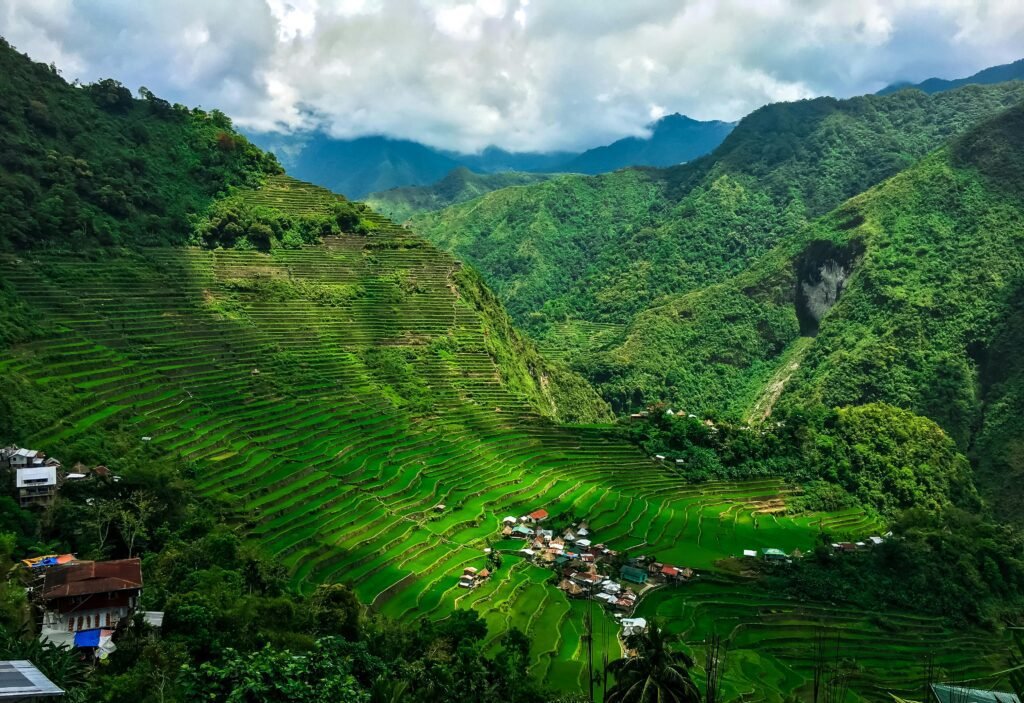
The terraces you’ll see in and around Banaue sit between roughly 1,000 and 1,400 metres above sea level in Ifugao province, part of the Cordillera mountains in northern Luzon. They’re the historic domain of the Ifugao people, who developed sophisticated irrigation, forest stewardship (the muyong woodlots above the terraces) and rice-growing systems over many centuries. You’ll notice that the landscape isn’t just fields; it’s a woven fabric of stone walls, contour-hugging paddies, canals, paths and villages – a cultural landscape in the truest sense.
UNESCO status, clearly explained
Here’s the nuance many blogs miss. The UNESCO World Heritage Site is officially titled Rice Terraces of the Philippine Cordilleras. It comprises five distinct terrace clusters: Batad and Bangaan (both within the municipality of Banaue), plus Hungduan, Mayoyao and Nagacadan (Kiangan). The famous roadside “Banaue Viewpoint” terraces you may know from postcards are not part of the UNESCO inscription (they’re a National Cultural Treasure), but they are wonderful to see and photograph. What UNESCO recognises is a living agricultural system and the communities that sustain it.
Culture you can hear as well as see
If you’re lucky, you might witness echoes of Ifugao intangible heritage during your trip, especially the Hudhud chants, traditionally performed during rice sowing and harvest, wakes and rituals. Even if you don’t hear the chants in person, you’ll feel their presence in how closely life here tracks the seasons. The terraces are also recognised internationally as a Globally Important Agricultural Heritage System (GIAHS), shorthand for “this way of farming sustains biodiversity, water and culture, not just calories.”
Fast Facts & Figures
- Where: Banaue & neighbouring municipalities (Ifugao, Northern Luzon).
- Altitude: Common viewpoints/villages sit c. 1,000–1,400m; expect cooler air than the lowlands.
- UNESCO-listed clusters (within easy reach): Batad (amphitheatre-like terraces), Bangaan (classic valley scene). Other clusters, Hungduan (Hapao), Mayoyao, Nagacadan/ Kiangan, are rewarding extensions.
- Getting there: Overnight bus from Manila (approx. 9–10 hours); public vans/jeepneys locally. The nearest domestic airport is Cauayan (CYZ), followed by a road transfer.
- Terrain & difficulty: Paths range from simple road viewpoints to steep, stepped stone trails between paddies; Batad–Tappiya Falls is a real workout.
- Fees: Expect a small environmental/registration fee in Banaue and additional local fees (e.g., Batad). Bring cash.
- Connectivity: Patchy mobile signal in valleys; download offline maps.
- Drones: Regulations exist nationally; local villages may set additional rules – ask first.
Highlights: What to See and Do
1) Batad: The amphitheatre of rice
An Ifugao classic. From the Saddle Point (road head), it’s a downhill walk into the village (luggage carriers available). The terraces curve in near-perfect concentric bands—a jaw-dropper at any time of day. From the village, a steep trail drops to Tappiya Falls, where a tall chute crashes into a cold plunge pool, brilliant after a sweaty hike. Allow 3–5 hours return for the village plus falls (more with photo stops).
For families: Skip the falls if you’ve got very young children or try just the village and main viewpoint. For couples: Overnight in a native-style hut and catch sunrise from the ridge. For solo hikers: Hire a local guide and extend to the Awa View Deck for big-sky panoramas.
2) Bangaan: A greener, gentler valley
Smaller than Batad, Bangaan offers a classic “village-in-the-paddies” scene, with shorter, less demanding walks. It’s a good choice with children or if you’re easing into terrace hiking. Ask around in town for jeepneys or tricycles heading that way.
3) Banaue viewpoints (roadside classics)
On the main road out of town, you’ll find multiple Banaue Viewpoints, raised terraces and lay-bys where you can appreciate the scale of the “postcard” paddies. They’re ideal if time is tight, you’re travelling with elders or you just want an easy photo stop between bigger walks.
4) Hapao (Hungduan) hot-spring walks
The Hapao terraces (in neighbouring Hungduan municipality) offer broader, more open paddies and a gentler walking profile, with the option to soak in a natural hot spring near the river. It’s a superb day trip from Banaue for mixed-ability groups.
5) Museums, craft and everyday culture
Drop by small local museums and craft shops (woodcarving, basketry, textiles) when you’re in town. These aren’t slick big-city institutions, that’s the charm. Even better, ask your guide or homestay about informal visits to traditional houses, rice-milling demonstrations or tasting rice wine; you’ll learn more in an hour than a dozen signs could teach.
Planning Your Trip
When to go (and what colours to expect)
At altitude, Banaue is cooler than the lowlands year-round. The drier season typically runs from December–May; rains and potential typhoons are more likely from June–November. Planting and harvesting cycles vary by village; as a rough guide, you’ll find lush greens late spring and early autumn, golden tones pre-harvest, and sculptural water-mirror terraces soon after planting. Whatever the month, pack a light rain shell and layers – mornings and nights can be crisp.
Getting there & around
From Manila (and Clark)
- Overnight buses: Companies run night services from Metro Manila to Banaue and nearby towns. Journey time is typically 9–10 hours. Seats can sell out in peak weeks; pre-book online where available.
- By air + road: For those who dislike night buses, consider flying to Cauayan (CYZ), then continue by van or private transfer (roughly 2–4 hours depending on conditions). Services vary – check schedules before you book flights.
Local transport
- Jeepneys & vans connect Banaue with Batad Saddle, Bangaan, Hungduan and other villages; frequencies can be thin, so private tricycles or chartered jeepneys are common, especially for sunrise/ sunset.
- On foot: Trails are the point. Surfaces can be steep, stepped and slippery after rain – sturdy footwear is essential.
Practicalities
- Registration & fees: Stop at the Banaue Tourism Office on arrival to register and pay the small environmental fee. Some villages (e.g., Batad) collect their own local fee at the trailhead or village desk; carry small notes.
- Guides: Hiring a local guide isn’t just helpful for safety – your money supports the community and you’ll gain far richer context.
- Cash: ATMs are limited and can be offline; bring sufficient cash from Manila or Baguio.
- Health & safety: Hydrate, sun-protect and take breaks – trails involve real elevation change. Landslides can occur in the wet season; heed local advice.
Accessibility notes
The principal roadside viewpoints are accessible by vehicle with short, level approaches, but most terrace paths and village steps aren’t wheelchair-friendly. Families with toddlers will find a back-carrier far easier than a buggy. If you or a travelling companion has limited mobility, opt for scenic drives to viewpoints, short edge-of-village strolls, and time in town museums and cafés.
Photography & drones
Terraces photograph beautifully at first light and late afternoon; watch for reflected skies in water-filled paddies and be mindful of farmers at work. Drone flying is regulated nationally and may be restricted locally – always ask the barangay (village) or your guide before launching, keep clear of people and livestock, and don’t fly over ceremonies or private property. Even if you’re within national rules, local consent matters.
Suggested Itineraries
Option A: One Perfect Day from Banaue (low-effort, high-reward)
Works well for families with young children or travellers short on time.
- 07:30 Breakfast in Banaue town; register at the Tourism Office.
- 08:30 Banaue Viewpoints circuit by tricycle/jeepney: hop between 2–3 viewpoints for different angles; short strolls at each.
- 11:30 Early lunch at a simple terrace-view café in town.
- 13:00 Bangaan half-day: drive to the viewpoint and take an easy, guided walk along the terrace edges (turn back whenever energy dips).
- 16:30 Return to town; crafts stop or small museum.
- 18:30 Dinner at a family-run restaurant; early night.
Why it works: minimal steep walking, built-in breaks, and that sense of seeing “the big picture” without forcing it.
Option B: The Classic 2-Day/1-Night Batad Experience
Best for couples and adventurous families with school-age children.
Day 1
- Morning: Travel from Manila (bus arrives in Banaue early) or from Baguio/ Sagada; register and stash any city luggage at your Banaue base.
- Late morning: Jeepney or tricycle to Batad Saddle; walk down into Batad (allow 45–60 minutes with stops).
- Afternoon: Settle into your homestay; visit the main amphitheatre viewpoint and linger as the light slides across the terraces.
- Evening: Simple Ifugao supper at your homestay; if the sky’s clear, stargaze—light pollution is low.
Day 2
- Early: Pre-breakfast sunrise on the ridge.
- Morning: Guided hike to Tappiya Falls (steep; good shoes essential).
- Lunch: Back in the village; snack, rest and begin the hike up to the Saddle mid-afternoon.
- Evening: Return to Banaue (or continue by road to Sagada if you’re extending north).
Timing notes: Total walking time across the two days can easily top 5–7 hours including the falls; add more for photo stops. Build slack for weather and rest.
Option C: 3 Days/2 Nights – Rice Terraces Loop with Sagada
Ideal for solo travellers and couples wanting a mini-adventure with variety.
Day 1 – Banaue & Hapao (Hungduan)
Arrive by night bus; register in town. Transfer to Hapao for a gentler terrace walk plus river/ hot-spring soak. Return to Banaue for dinner and sleep.
Day 2 – Batad deep dive
Transfer to Batad Saddle; hike into the village. Explore the amphitheatre, then choose either Tappiya Falls or the Awa View Deck ridge (longer, panoramic). Overnight in Batad (native-house hut for couples makes a memorable stay).
Day 3 – Onward to Sagada
Hike out to the Saddle; road transfer via Bontoc to Sagada (caves, hanging coffins, cool pine air). Stay onward in Sagada, or overnight and return by bus to Manila.
Distance & pacing: Road legs are winding; don’t be fooled by short kilometres. Build generous transfer windows between villages and onward buses.
Where to Eat & Drink
Banaue town has a cluster of simple, traveller-friendly eateries: think rice and noodle plates, vegetable stir-fries, soups and grilled meats. The draw is the view and warmth rather than culinary fireworks. In Batad and Bangaan, your homestay is the best kitchen: hearty breakfasts, packed lunches for the trail, and home-cooked dinners that taste all the better after a day on the steps.
- People’s Lodge & Restaurant (Banaue) – A long-running traveller hub with terrace views and reliable Filipino staples.
- Uyami’s Green View (Banaue) – Central location; simple, comforting dishes and a balcony looking out to the paddies.
- Homestay kitchens in Batad – Many offer rice-wine tastings, local greens and soups; ask about vegetarian options.
- Cafés near the Banaue Viewpoints – Good for a mid-circuit pick-me-up and photo stop.
Dietary needs: Vegetarian dishes are easy to find; vegan options are possible with notice. Carry snacks if you have specific requirements—remote villages stock limited items.
Where to Stay
In Banaue (town base):
- Banaue Hotel & Youth Hostel – If you want hotel-style facilities and a pool, this is the big, old-school standby, handy for families who want a fixed base and day trips.
- People’s Lodge / Uyami’s Green View – Simple rooms above restaurants, great for early buses and town errands.
- View-edge guesthouses around the road to Viewpoint – Quieter stays with big outlooks; check current road access.
In Batad (in the terraces):
- Homestays & native-house huts – Rustic, atmospheric and perfect for couples chasing a sunrise-from-the-door moment. Facilities are basic; bring a warm layer for cool nights.
- Small inns near the main viewpoint – A touch more comfort while keeping you close to sunset and dawn light.
In Hungduan/ Hapao:
- Riverside and valley guesthouses – Good if you plan a hot-spring day and want to be away from town bustle.
Booking tips: Bring cash for balances, confirm transfer arrangements with your host, and ask about hot water and power availability (brownouts happen).
Seasonal Events & Special Experiences
- Gotad ad Ifugao (June) – Province-wide cultural festivities centred on Ifugao’s foundation day, featuring parades, traditional sports and performances.
- Imbayah Festival (Banaue) – A major celebration of Ifugao culture historically held every few years; if your dates align, expect indigenous races, woodcarving showcases, and rites linked to rice wine and harvest.
- Hands-on heritage – Ask guides about rice-milling, weaving, woodcarving or muyong forest walks that explain how water, trees and terraces are managed together.
Respectful travel: If you encounter ceremonies, keep a distance, ask before photographing people, and follow your guide’s cues.
Responsible Travel: How to Tread Lightly
- Stay on paths and terrace edges; a single misstep can damage a paddy wall.
- Hire local: guides, jeepneys, homestays – your money keeps the terraces tended.
- Pack in–pack out: take litter home; avoid single-use plastics where possible.
- Ask first: many homes and fields are private spaces; permission goes a long way.
- Dress modestly in villages and during festivals.
- Mind the water: your long shower is someone’s irrigation downstream.
Broader UK Tie-ins: From Ifugao to the Fells
What makes Banaue remarkable isn’t just the spectacle – it’s the interlocking of people and landscape. If that resonates, you’ve got kindred places across the UK to explore next:
- The English Lake District (UNESCO World Heritage) – Another cultural landscape where farming and fell walls shape the view; swap rice paddies for drystone fields and upland herds.
- The Slate Landscape of Northwest Wales (UNESCO World Heritage) – An industrial-cultural landscape where communities re-use and celebrate their heritage; the story of stone, water and hard work feels familiar after Ifugao.
- Scotland’s crofting landscapes & Wales’ Eryri (Snowdonia) – Highland and upland ways of living that, like Ifugao, balance tradition and modern tourism.
Use Banaue as a lens: look for living heritage – places where culture isn’t behind glass, but out on the land, weathering the same wind you are.
Practical Packing List (What People Forget)
- Trail shoes with grip (stone steps get slick).
- Light rain shell and a warm layer for cool mornings/ nights.
- Sun protection (hat, high-SPF, sunglasses).
- Cash in small notes.
- Headtorch (for early starts/ brownouts).
- Dry bags for cameras/phones during showers.
- Reusable bottle (ask your stay about refills).
- Basic first-aid (blister care matters here).
FAQ: Quick Answers Before You Book
Is Batad suitable for young kids?
Yes – with caveats. Stick to the village and main viewpoint, take it slow, and consider a carrier for toddlers. Skip Tappiya Falls unless you’re confident with steep steps.
Do I need a guide?
In villages like Batad, it’s strongly recommended, for safety, route-finding and cultural respect. Your guide’s stories are half the experience.
Can I do Banaue as a day trip from Manila?
Technically, yes, but you’ll spend most of it on the road. Minimum 1–2 nights in the highlands makes far more sense.
Is there Wi-Fi?
Patchy. Assume offline and be pleasantly surprised when it works.
What about travel insurance?
Treat this like a hiking destination, make sure your cover includes trekking and remote medical transport.
Final Thought
Banaue isn’t just a place you “tick off”. It’s a landscape that deepens as you slow down, terraces reveal their patterns as light shifts, conversations with guides turn a view into a story, and a bowl of soup after a windswept ridge tastes like the best thing you’ve ever had. Go for the views; stay for the culture; come back for the people.